Confucius: The Life Behind the Philosophy
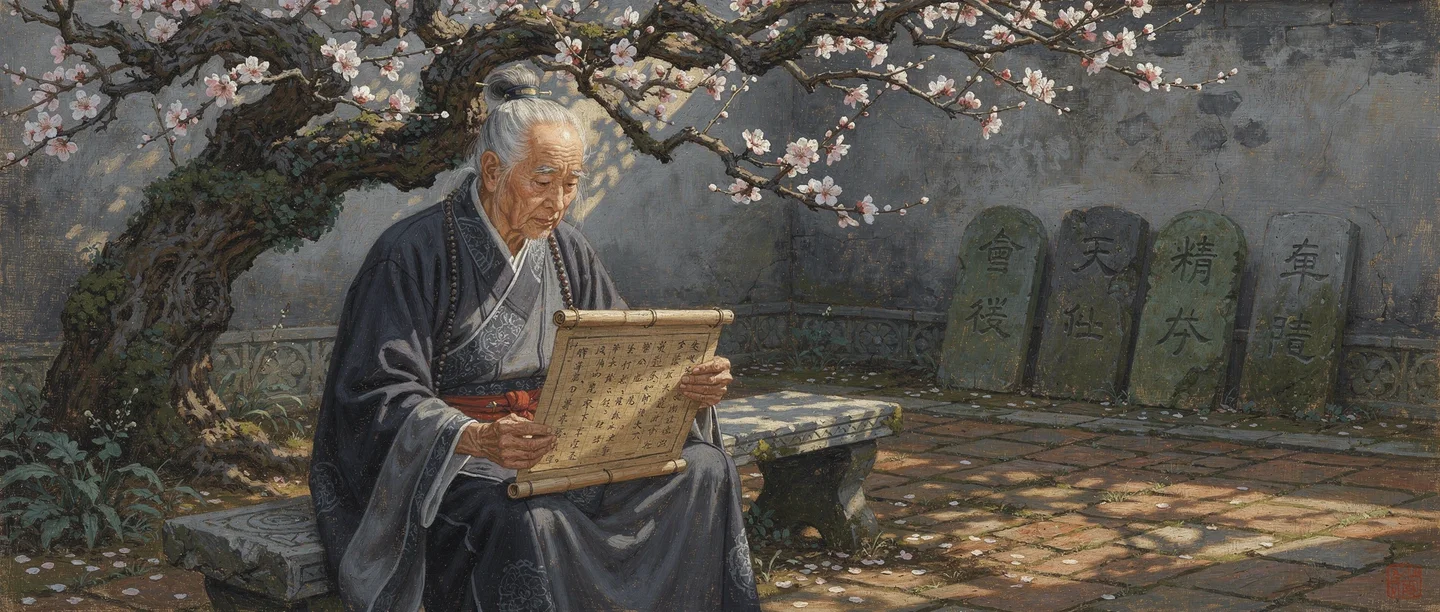
To understand what is Confucianism, you must start with the man behind it. Confucius (551-479 BCE) was a Chinese teacher and political adviser born during a period of warfare and social disorder known as the Spring and Autumn period. His original name was Kong Qiu, and he is also known as Kongzi (Master Kong). Despite holding only minor government positions during his lifetime, his teachings eventually became the foundation of Chinese civilisation.
Confucius believed that society had fallen into chaos because people had abandoned the moral standards of earlier times. He did not claim to be inventing new ideas. Instead, he saw himself as transmitting the wisdom of ancient sage-kings like the Duke of Zhou. His method was education: he accepted students from all social backgrounds, which was revolutionary for his era.
After his death, his followers compiled his sayings into a text called the Analects (Lunyu), meaning "Selected Sayings." This became the most important Confucian text. In it, Confucius discusses virtue, proper conduct, and the responsibilities that come with different social roles. The Analects remains widely studied today — alongside foundational texts from ancient Greece, it represents one of the earliest attempts to answer life's deepest ethical questions.
His devoted followers continued teaching after his death. Over centuries, their work transformed a local school of thought into one of the most influential philosophical traditions in human history.
Core Ideas: Ren, Li, and the Five Relationships
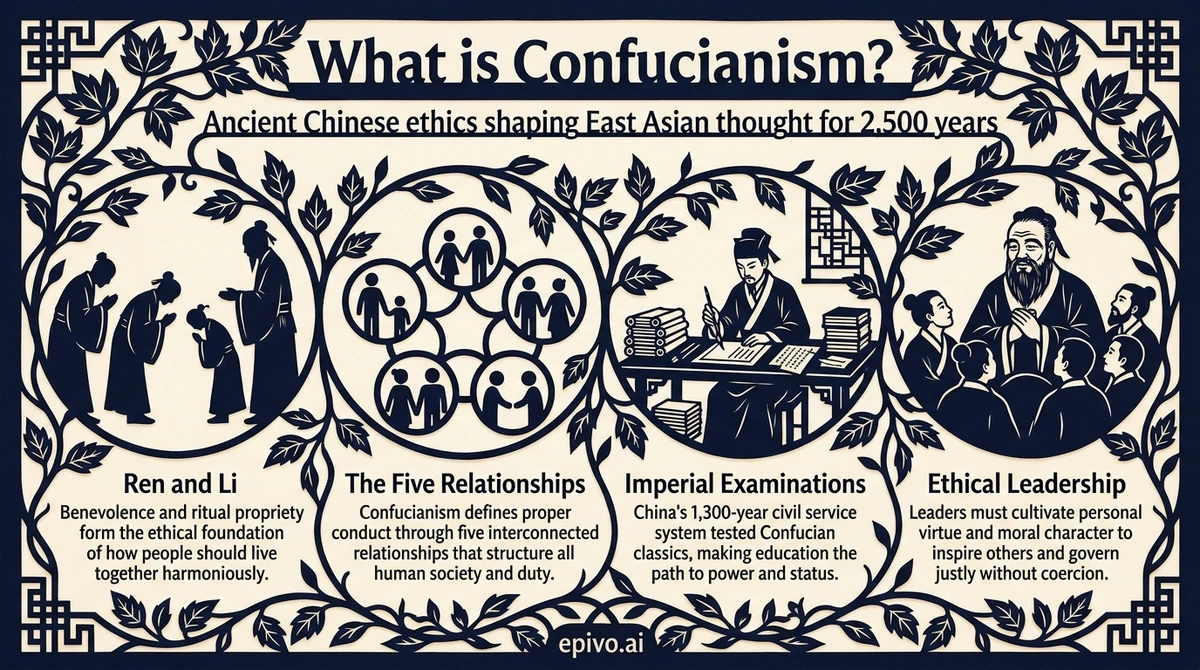
So what is Confucianism in terms of its core ideas? At the heart of this tradition are two central concepts: ren (benevolence or humaneness) and li (ritual propriety or proper conduct). Together, they define what it means to be a good person in the Confucian tradition.
Ren: The virtue of humaneness
Ren is the highest Confucian virtue, often translated as "benevolence" or "humaneness." Confucius described it as loving others and treating people with genuine care. A person who cultivates ren acts with empathy, putting themselves in another's position before judging. Confucius expressed this in a phrase remarkably similar to the Golden Rule: "Do not do to others what you would not want done to yourself."
Li: Ritual and proper conduct
Li refers to the rituals, customs, and norms of proper behaviour that hold society together. Following li is not blind obedience to rules. Rather, it is the outward expression of inner virtue. When a person bows to an elder or performs a ceremony with sincerity, they are practising li. Rituals give structure to relationships and create shared order.
The Five Relationships
Confucianism organises society around five key relationships, each carrying mutual obligations:
- Ruler and subject — the ruler governs justly; the subject is loyal
- Parent and child — the parent nurtures; the child shows filial piety
- Husband and wife — each fulfils their role with respect
- Elder sibling and younger sibling — the elder guides; the younger defers
- Friend and friend — the only equal relationship, built on trust
These relationships are not about domination. In Confucian ethics, authority comes with responsibility. A cruel ruler forfeits the right to obedience. Similarly, filial piety does not mean blind submission — a good child should gently correct a parent who acts wrongly.
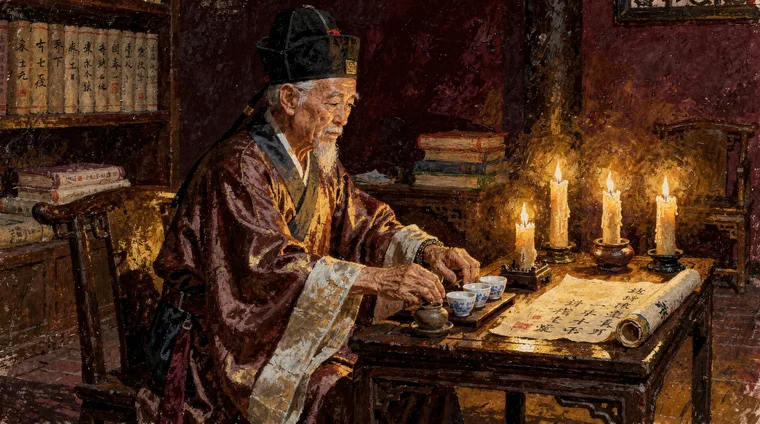
Image: Generated with AI (Epivo)
Confucianism's Influence Across East Asia
Confucianism spread far beyond China, becoming a defining force in Korean, Japanese, and Vietnamese civilisation.
China: From philosophy to state ideology
During the Han dynasty (206 BCE - 220 CE), Confucianism became the official state philosophy of China. The imperial examination system, which selected government officials based on their knowledge of Confucian texts, lasted for over a thousand years. This created a powerful link between education, merit, and political authority.
Korea, Japan, and Vietnam
Confucian values spread to Korea during the Three Kingdoms period and became central to the Joseon dynasty (1392-1897), which built its legal and educational system on Confucian principles. In Japan, Confucian ideas influenced the samurai code and shaped the Tokugawa era's social hierarchy. Vietnam's examination system was modelled on China's Confucian civil service.
Neo-Confucianism
During the Song dynasty (960-1279), scholars like Zhu Xi revitalised Confucianism by integrating ideas from Buddhism and Daoism. This movement, known as Neo-Confucianism, added a metaphysical dimension. Zhu Xi argued that all things contain li (principle) and qi (material force). Neo-Confucianism became the dominant intellectual tradition in China, Korea, and Japan for centuries.
Today, Confucian values around education, family loyalty, and respect for elders continue to shape daily life across East Asia. The emphasis on hard work is frequently cited as a factor in the region's educational achievements.
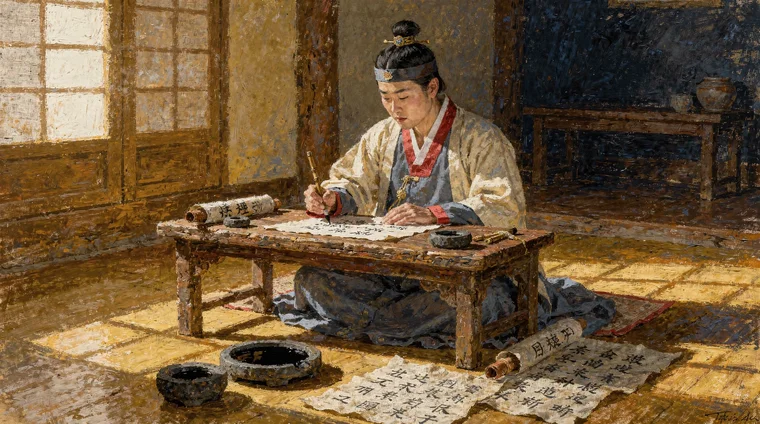
Image: Generated with AI (Epivo)
Did you know?
-
The Analects of Confucius, compiled after his death by his followers, contains 497 passages organised into 20 books and has been continuously studied for over 2,000 years.
Stanford Encyclopedia of Philosophy — Confucius -
China's imperial examination system, based on Confucian classics, operated from 605 CE to 1905 CE — making it the longest-running meritocratic selection system in world history.
Encyclopaedia Britannica — Chinese Examination System -
Confucius's birthday (28 September) is celebrated as Teacher's Day in Taiwan and as a cultural holiday across several East Asian countries.
UNESCO — Confucius Prize for Literacy
Why Confucianism Matters for Students Today
Asking what is Confucianism today is far from an academic exercise. Its ideas about ethical leadership, the value of education, and the importance of personal responsibility remain deeply relevant across the modern world.
For students, Confucianism offers a different perspective on questions that Western philosophy also addresses: What makes a good leader? What do we owe our families and communities? How should education shape character, not just skills? Comparing Confucian answers with those from Greek philosophy or Enlightenment thinkers gives students a richer, more global understanding of ethics.
Confucianism also challenges students to think critically about authority. While critics argue that Confucian ideas have sometimes been used to justify rigid hierarchies, Confucius himself insisted that authority must be earned through moral conduct. This tension between tradition and justice runs through many contemporary debates.
Moreover, understanding Confucianism is essential for understanding modern East Asia. From South Korea's education culture to Japan's business etiquette to China's political philosophy, Confucian values are embedded in institutions that affect billions of people.
Epivo's International Curriculum covers Confucianism as part of a six-course journey through Chinese, Indian, Islamic, Korean, Japanese, and African philosophy.

Image: Generated with AI (Epivo)
Frequently asked questions
- Is Confucianism a religion or a philosophy?
- Confucianism is primarily an ethical and philosophical system rather than a religion. It does not centre on worship of a god or an afterlife. However, it includes rituals honouring ancestors and has temples dedicated to Confucius, so some scholars classify it as both.
- What is the most important Confucian virtue?
- Ren (benevolence or humaneness) is considered the highest virtue. Confucius described it as caring for others, acting with empathy, and treating people as you would wish to be treated yourself.
- How did Confucianism spread beyond China?
- Confucianism spread through trade, diplomacy, and the adoption of Chinese writing and administrative systems. Korea, Japan, and Vietnam each adapted Confucian ideas to their own cultures over many centuries.
- What is the difference between Confucianism and Daoism?
- Confucianism focuses on social ethics, proper relationships, and active participation in government. Daoism emphasises living in harmony with nature, spontaneity, and withdrawing from worldly concerns. Both traditions originated in ancient China and have influenced each other.
- What are the Analects?
- The Analects (Lunyu) is a collection of sayings and dialogues attributed to Confucius, compiled by his students after his death. It is the foundational text of Confucianism and covers topics including virtue, governance, education, and proper conduct.
- Is Confucianism still practised today?
- Confucian values remain influential across East Asia. Millions of people follow Confucian ethical principles in daily life. Confucian temples are active in China, South Korea, and Vietnam, and Confucian ideas shape education systems and family life throughout the region.