What Caused the Industrial Revolution?
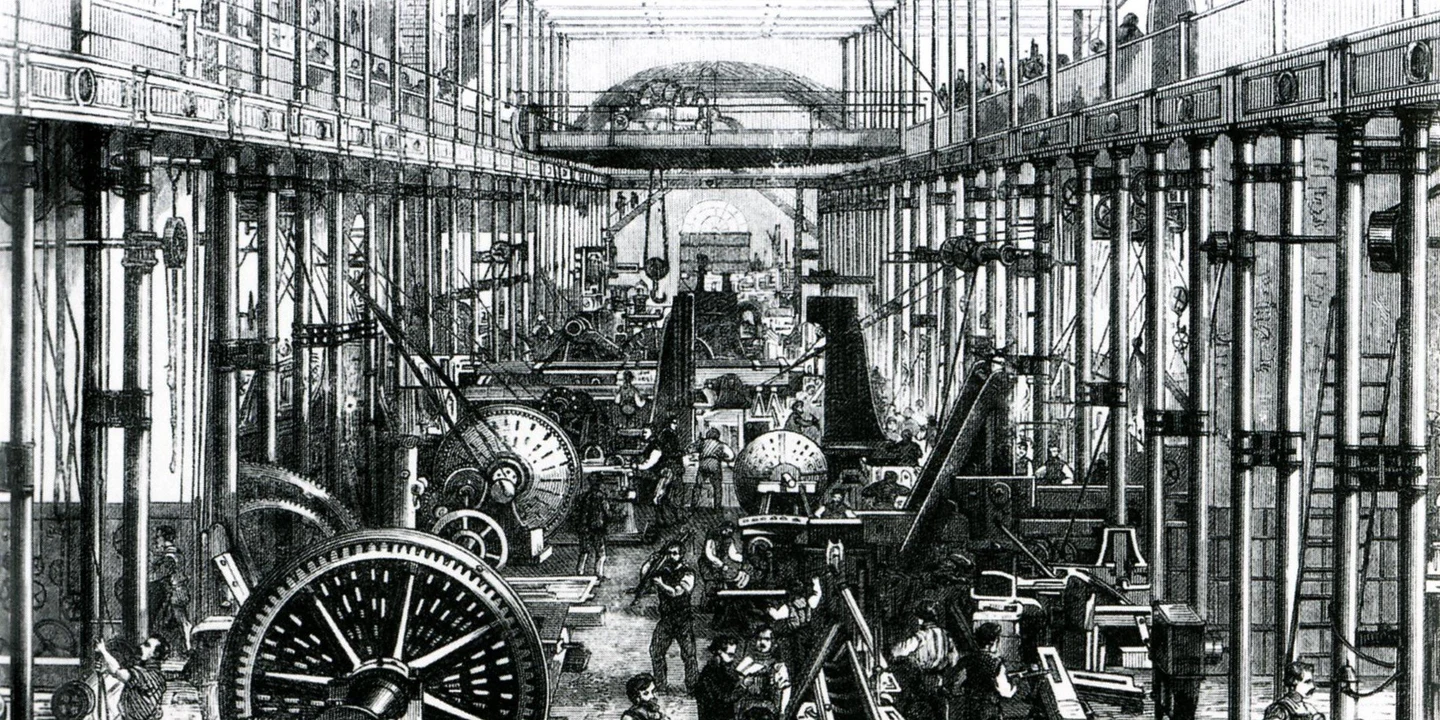
The Industrial Revolution began in Britain for several interconnected reasons. Britain had large deposits of coal and iron ore — the raw materials of industry. It had rivers and canals for transport. It had a stable government, property rights that encouraged investment, and a growing empire providing raw materials and markets.
Agriculture had already become more efficient. Enclosure acts drove landless workers into towns, creating a labour force ready for factory work. Capital from trade, banking, and the Atlantic slave trade provided investment for new ventures.
The steam engine
James Watt's improved steam engine (1769) was the central technology of the Industrial Revolution. Steam could power machinery in factories, pumps in mines, and — from the 1820s onwards — locomotives on railways. Watt's engine made power portable and scalable in a way that water mills and horse-drawn machinery never could.
Factories, Cities, and Social Change
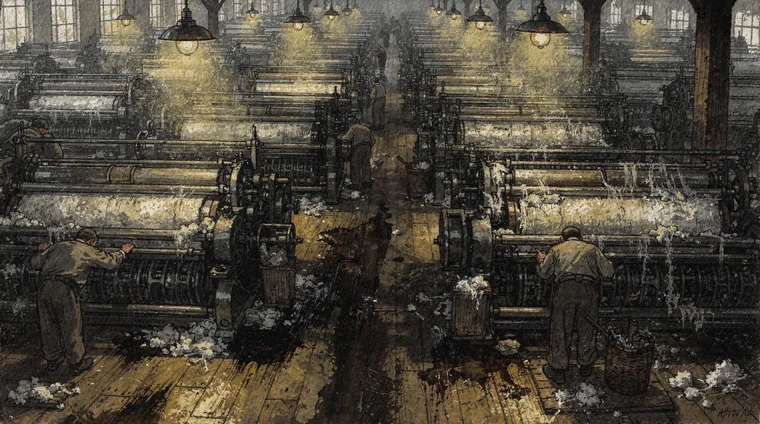
The factory system concentrated workers and machinery in one place. It replaced the 'putting-out' system, where workers made goods at home. Factory work was disciplined, regulated by the clock, and often dangerous.
Urbanisation
Cities grew at extraordinary speed. Manchester's population grew from about 25,000 in 1772 to over 300,000 by 1850. Workers lived in cramped, polluted conditions with no running water or sewage. Cholera epidemics swept through overcrowded towns. Life expectancy in industrial cities was dramatically lower than in the countryside.
Child labour
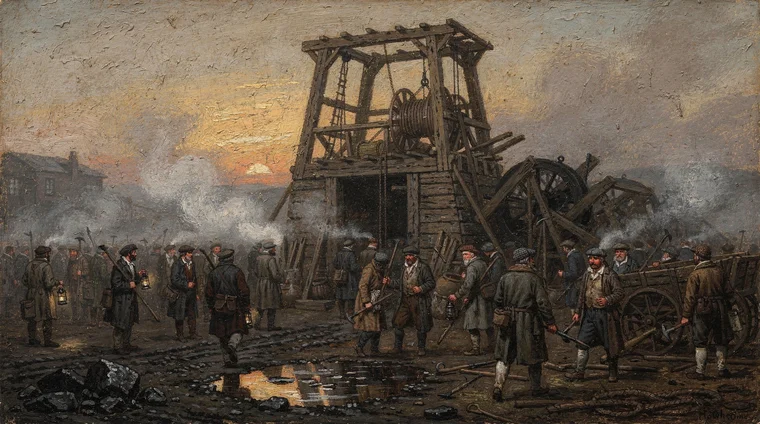
Children as young as five worked in mines, mills, and chimneys. Factory Acts from 1833 onwards began restricting child labour — but progress was slow. The Ten Hours Act of 1847 limited the working day in textile factories for women and young people. Full protection for children came decades later.
New social classes
The Industrial Revolution created a wealthy industrial middle class and a large urban working class. These new classes had different interests from the landed aristocracy. Pressure for political reform grew. The Reform Act of 1832 gave industrial cities like Manchester and Birmingham representation in Parliament for the first time.
Why the Industrial Revolution Still Matters
The Industrial Revolution shaped the world we live in. The global economy — based on manufacturing, fossil fuels, and international trade — has its roots in this period.
Railways and communication
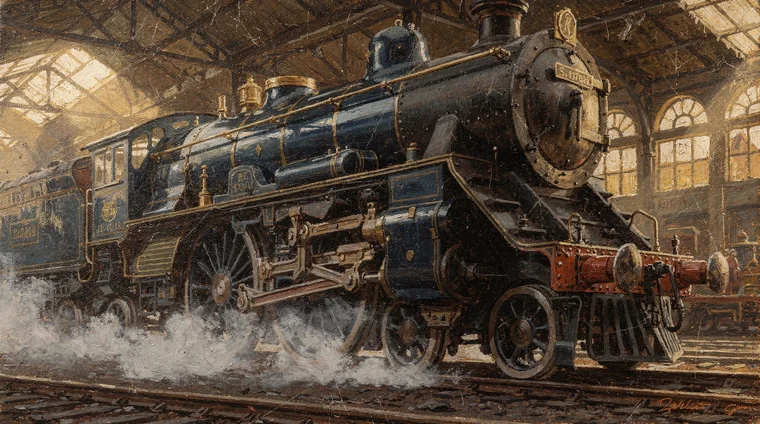
George Stephenson's Rocket demonstrated steam-powered rail travel in 1829. Within 20 years, Britain had over 9,000 km of railway. Goods, people, and ideas moved faster than ever before. The telegraph, invented in the 1830s, allowed near-instant long-distance communication for the first time.
Environmental consequences
The Industrial Revolution was powered by coal. Its effects on the atmosphere began the climate change that scientists study today. Industrial pollution damaged rivers and air quality in ways that persisted for generations.
A global transformation
By the late 19th century, the Industrial Revolution had spread to France, Germany, the United States, and eventually Japan. It fundamentally altered the balance of world power. Industrialised nations used their economic and military strength to extend empires across Asia, Africa, and the Pacific. The world we inherited was shaped by this transformation.
Frequently asked questions
- Why did the Industrial Revolution start in Britain and not elsewhere?
- Britain had the right combination of factors: coal and iron deposits, a stable legal system protecting investors, navigable rivers and canals, agricultural enclosure that created a mobile labour force, and an empire providing markets and raw materials. No other country had all these at the same time.
- Was the Industrial Revolution good or bad?
- Both, depending on perspective and time frame. In the short term, it caused immense suffering: child labour, urban poverty, pollution, and dangerous factories. In the longer term, it raised living standards, produced medical advances, and created the technology behind modern life. Historians continue to debate the overall balance.
- How did the Industrial Revolution affect women?
- Working-class women and children worked in factories and mines, often in dangerous conditions. Middle-class women were increasingly expected to stay at home — reinforcing the 'separate spheres' ideology. However, the period also sowed seeds of change: women's paid work outside the home, though exploited, helped lay foundations for later feminist movements.
- When did the Industrial Revolution end?
- There is no clear end date. The first Industrial Revolution, based on steam and textiles, is usually dated from c.1760 to c.1840. A second Industrial Revolution from the 1870s to 1914 brought steel, chemicals, and electricity. Some historians argue industrialisation is ongoing. The Industrial Revolution was a process, not an event.