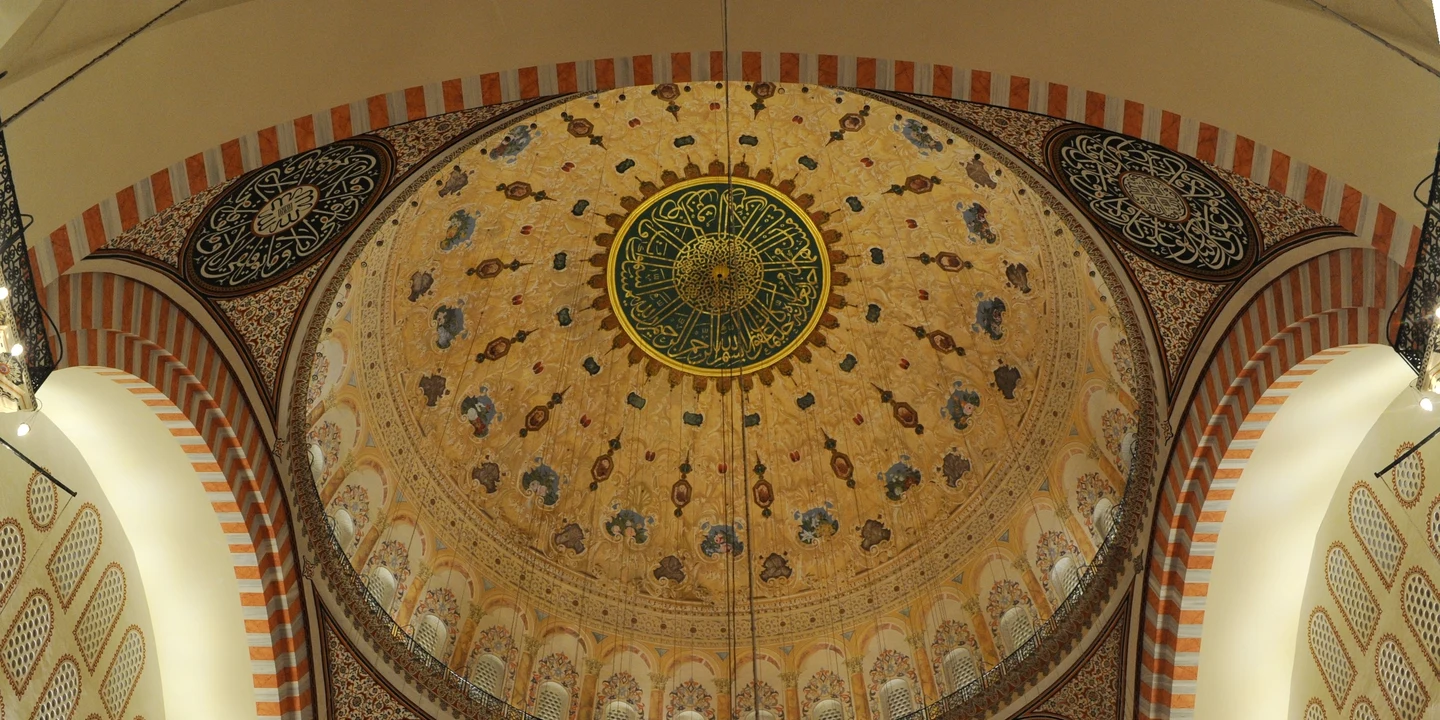
What was the Ottoman Empire and how did it begin?
To understand what was the Ottoman Empire, we need to start at its origins. The empire began around 1299 as a small Turkish principality in northwestern Anatolia, in what is now Turkey. Its founder, Osman I, led a group of warriors who gradually expanded their territory at the expense of the weakening Byzantine Empire.
Over the next 150 years, Ottoman rulers conquered vast territories across southeastern Europe and Anatolia. In 1453, Sultan Mehmed II captured Constantinople — the capital of the Byzantine Empire — and renamed it Istanbul. This conquest marked a turning point in world history, because it ended the last remnant of the Roman Empire and established the Ottomans as a major European and Asian power.
A multiethnic empire
Unlike many empires of its era, the Ottoman Empire governed diverse religious and ethnic communities through the millet system. Under this system, Christians, Jews, and other non-Muslim groups could manage their own religious affairs and courts. According to Encyclopaedia Britannica, this relative tolerance helped the empire maintain stability across a vast, diverse population for centuries. However, non-Muslim subjects still faced legal restrictions and additional taxes.
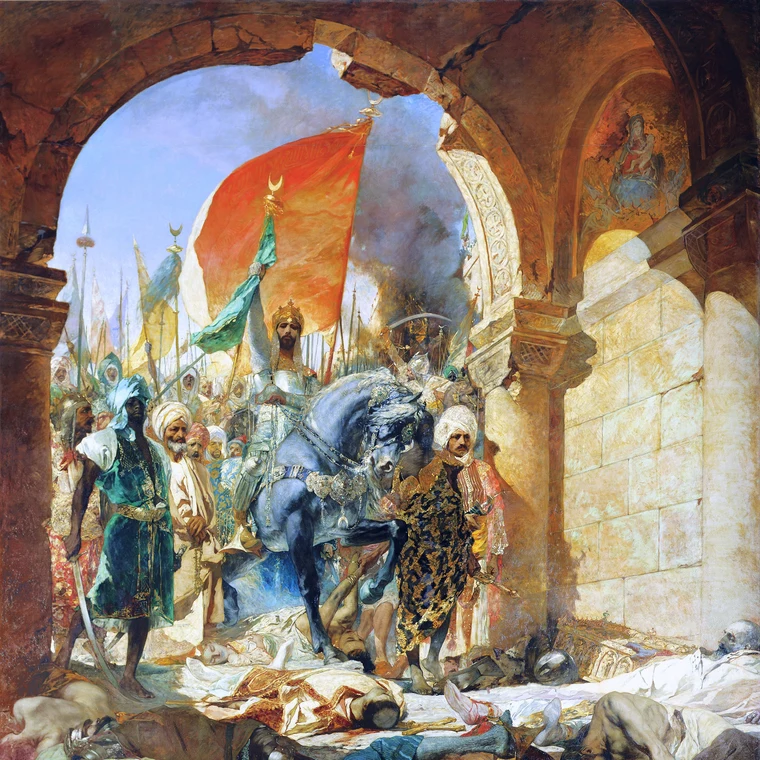
Image: Jean-Joseph Benjamin-Constant, via Wikimedia Commons (Public domain)
Suleiman the Magnificent and the golden age
The Ottoman Empire reached its greatest extent under Sultan Suleiman the Magnificent, who ruled from 1520 to 1566. During his reign, the empire controlled territory stretching from Hungary and the Balkans in Europe, through Anatolia and the Middle East, and across North Africa to Algeria.
Suleiman reformed the legal system, expanded trade, and oversaw a golden age of architecture, literature, and art. Istanbul became one of the largest and most cosmopolitan cities in the world. The empire also controlled key trade routes between Europe and Asia, generating enormous wealth from commerce.
Military and administrative strength
The Ottoman military relied on the Janissaries — elite soldiers originally recruited as children from Christian families in the Balkans. This practice, known as the devsirme, was both a source of military strength and a deeply controversial institution. In addition, the empire developed a centralised bureaucracy that allowed sultans to govern distant provinces effectively. At its height, the Ottoman Empire was home to roughly 25 million people across three continents.
So what was the Ottoman Empire at its peak? It was a superpower that rivalled any European state in military strength, cultural achievement, and administrative reach.
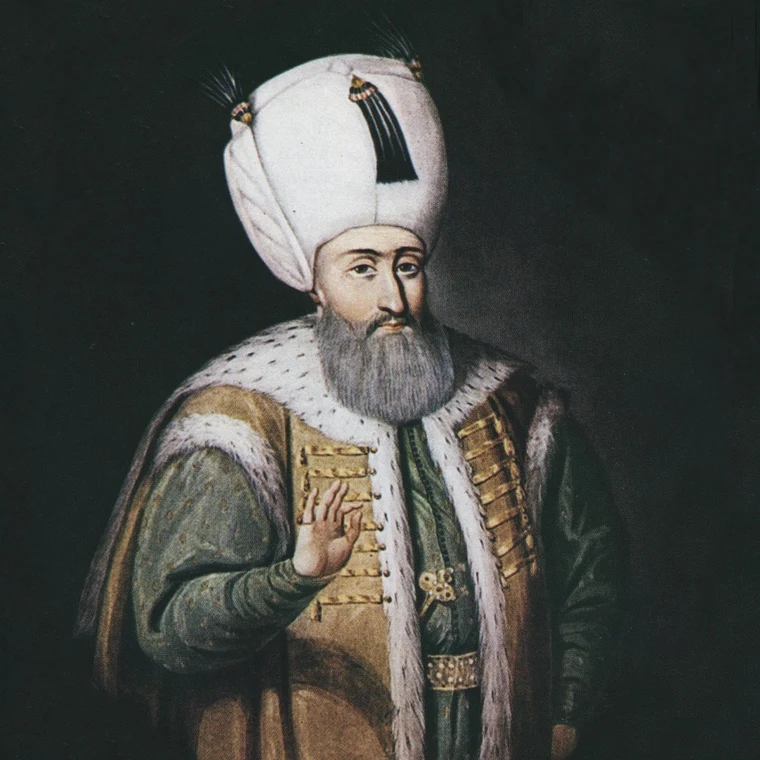
Image: Unknown artist, via Wikimedia Commons (Public domain)
The long decline of the Ottoman Empire
From the late 1600s onward, the Ottoman Empire entered a long period of decline. Several factors contributed to this slow weakening.
First, European powers industrialised and built modern armies, while Ottoman military technology fell behind. Second, nationalist movements in the Balkans led to the independence of Greece (1830), Serbia, Romania, and Bulgaria. By the late 1800s, European powers referred to the Ottoman Empire as the "Sick Man of Europe."
Reform attempts
Ottoman leaders attempted major reforms during the Tanzimat period (1839-1876), modernising the legal system, education, and the military. However, these reforms came too late to reverse the empire's territorial losses. In addition, growing imperialism by European powers eroded Ottoman sovereignty. Britain took control of Egypt in 1882, and France expanded into Ottoman North Africa. According to the BBC, each lost province weakened the empire's economic base and its ability to defend remaining territory.
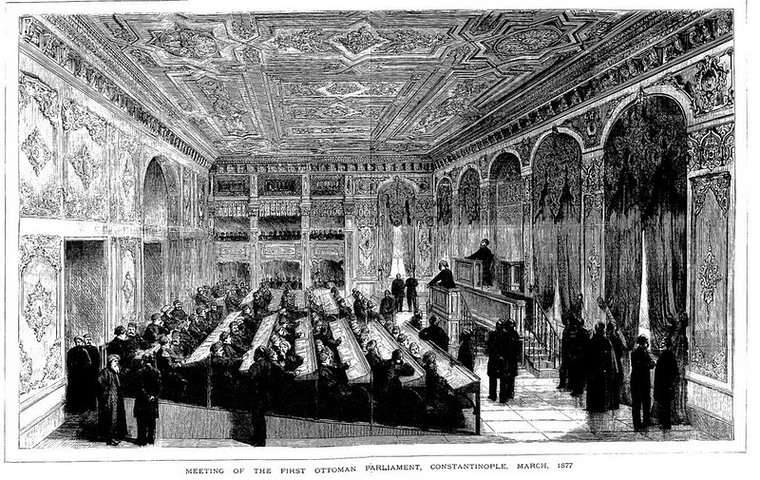
Image: Unknown photographer, via Wikimedia Commons (Public domain)
Did you know?
-
The Ottoman Empire lasted from approximately 1299 to 1922 — a span of over 600 years. At its peak under Suleiman the Magnificent, it controlled roughly 5.2 million square kilometres across three continents.
Encyclopaedia Britannica — Ottoman Empire -
Between 1915 and 1917, an estimated 1 to 1.5 million Armenians were killed during the Armenian Genocide — a campaign of mass deportation and murder carried out by the Ottoman government during World War 1.
United States Holocaust Memorial Museum — Armenian Genocide -
The 1916 Sykes-Picot Agreement secretly divided Ottoman territories in the Middle East between Britain and France, drawing borders that still define the modern states of Iraq, Syria, Lebanon, and Jordan.
National Archives (UK) — Sykes-Picot Agreement
The Ottoman Empire in World War 1 and its collapse
In 1908, a group of reformist officers known as the Young Turks seized power and attempted to modernise the Ottoman Empire. However, their rule coincided with disastrous military defeats in the Balkan Wars (1912-1913), which cost the empire nearly all its European territory.
In November 1914, the Ottoman Empire entered World War 1 on the side of Germany and Austria-Hungary. Ottoman forces fought on multiple fronts, including Gallipoli, where they repelled a major Allied invasion in 1915.
The Armenian Genocide
During the war, the Ottoman government carried out the systematic deportation and mass killing of Armenian civilians. Between 1915 and 1917, an estimated 1 to 1.5 million Armenians died through forced marches, starvation, and massacres. Scholars and institutions including the International Association of Genocide Scholars recognise these events as genocide. While political recognition remains contested in some countries, the historical evidence is well documented and the scholarly consensus is clear.
Partition and the end of empire
By 1918, Ottoman forces had collapsed on most fronts. The 1916 Sykes-Picot Agreement had already secretly divided Ottoman lands in the Middle East between Britain and France. After the war, the Treaty of Sevres (1920) formally dismantled the empire. Britain received mandates over Palestine, Iraq, and Transjordan, while France took Syria and Lebanon. In 1922, Turkish nationalists led by Mustafa Kemal Ataturk abolished the sultanate, and in 1923 they proclaimed the Republic of Turkey. The Ottoman Empire had ended, but its borders and conflicts continue to shape the Middle East today.
Understanding what was the Ottoman Empire matters because the political boundaries, ethnic tensions, and unresolved conflicts across the modern Middle East trace directly back to the empire's collapse and the post-war settlements that replaced it.
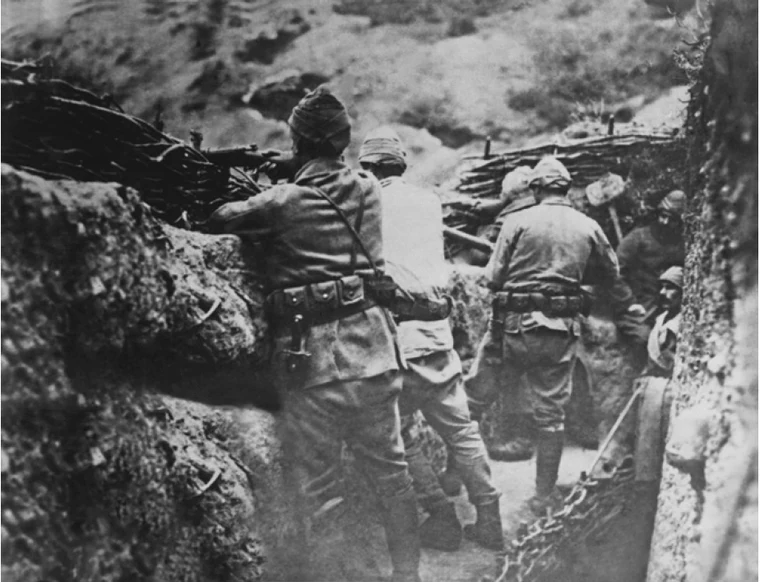
Image: Unknown photographer, via Wikimedia Commons (Public domain)
Frequently asked questions
- How long did the Ottoman Empire last?
- The Ottoman Empire lasted approximately 623 years, from its founding around 1299 by Osman I in Anatolia to the abolition of the sultanate in 1922. The Republic of Turkey was proclaimed in 1923 as its successor state.
- What countries were part of the Ottoman Empire?
- At its peak, the Ottoman Empire included modern-day Turkey, Greece, Bulgaria, Hungary, Romania, Serbia, Egypt, Iraq, Syria, Lebanon, Jordan, Israel, Palestine, Libya, Tunisia, Algeria, and parts of Saudi Arabia and Yemen.
- Why did the Ottoman Empire collapse?
- The Ottoman Empire collapsed due to military defeats in World War 1, rising nationalist movements across its territories, economic decline, and competition from industrialised European powers. The final blow came when Turkish nationalists abolished the sultanate in 1922.
- What was the Armenian Genocide?
- The Armenian Genocide was the systematic mass killing of approximately 1 to 1.5 million Armenians by the Ottoman government between 1915 and 1917. Scholars widely recognise it as genocide. Political recognition varies by country.
- What replaced the Ottoman Empire?
- The Republic of Turkey replaced the Ottoman Empire's core territory in 1923 under Mustafa Kemal Ataturk. Former Ottoman provinces became mandates administered by Britain and France, eventually forming the modern states of Iraq, Syria, Lebanon, Jordan, Israel, and others.