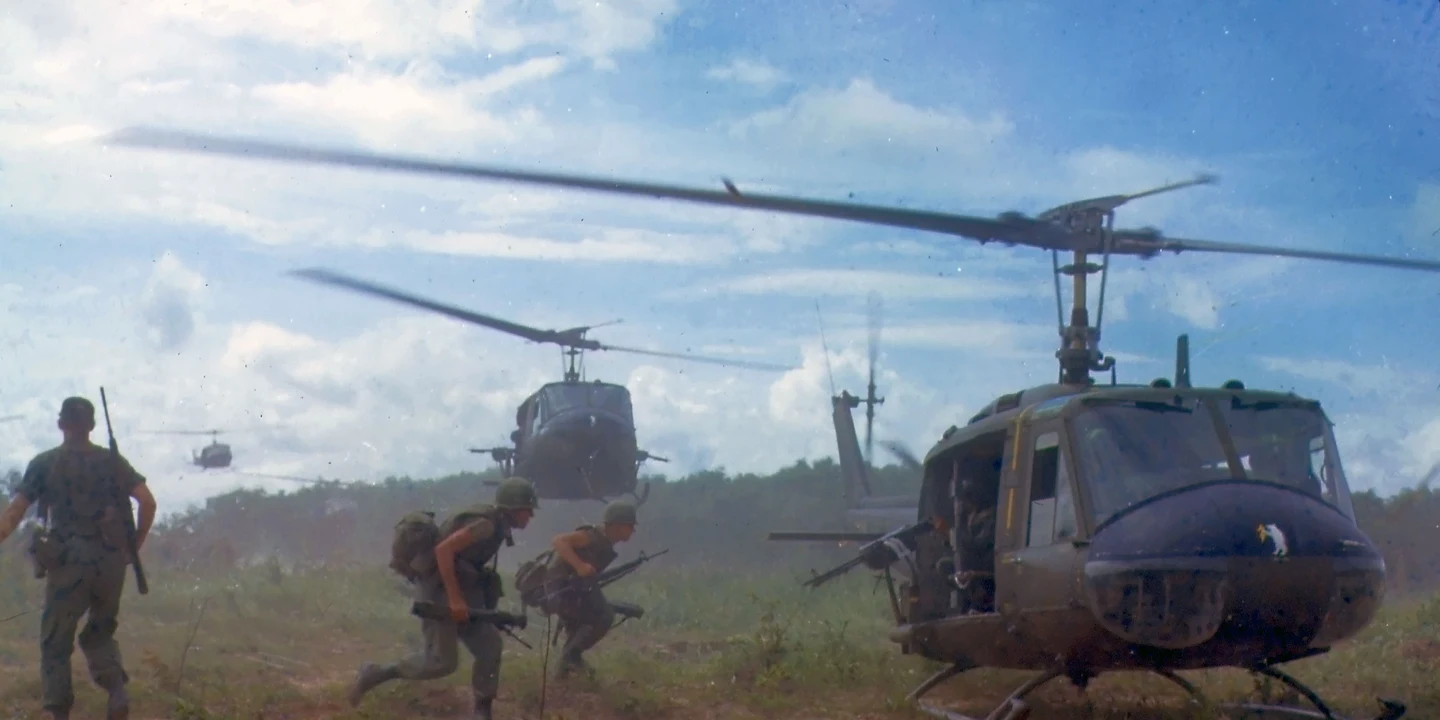
What caused the Vietnam War?
The Vietnam War grew out of decades of colonial rule and Cold War rivalry. To understand what was the Vietnam War, we need to begin with France's control over Indochina.
Vietnam was part of French Indochina from the 1880s until 1954. During World War 2, Japan occupied the region. After Japan's defeat, Vietnamese revolutionary leader Ho Chi Minh declared independence in September 1945, founding the Democratic Republic of Vietnam. However, France sought to reclaim its colony, sparking the First Indochina War (1946-1954).
The Geneva Accords and a divided nation
France's defeat at the Battle of Dien Bien Phu in 1954 ended its colonial rule. The Geneva Accords temporarily divided Vietnam at the 17th parallel. Ho Chi Minh's communist government controlled the North, while the US-backed government of Ngo Dinh Diem ruled the South. The planned reunification elections never took place, because the Diem government, supported by Washington, refused to hold them.
As a result, communist guerrilla fighters in the South — known as the Viet Cong — launched an insurgency against the Diem government. North Vietnam supported these fighters through a network of supply routes called the Ho Chi Minh Trail. This set the stage for direct American military involvement. The roots of this conflict connect to broader patterns of decolonization across Asia and Africa.
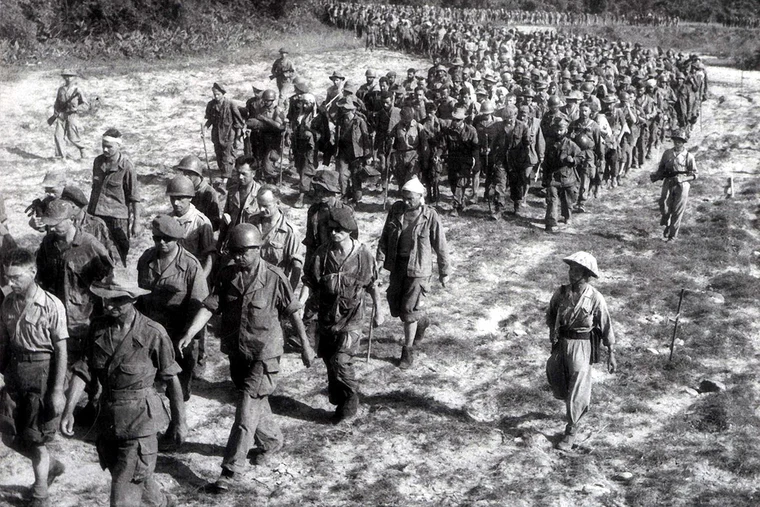
French prisoners of war marched from the fallen garrison at Dien Bien Phu, May 1954 — the defeat that ended French Indochina.. Image: AFP / Stringer, via Wikimedia Commons (Public domain)
How the Vietnam War escalated under US involvement
The United States gradually increased its role in Vietnam throughout the late 1950s and early 1960s. Initially, American involvement consisted of military advisors and financial aid to South Vietnam.
In August 1964, the Gulf of Tonkin incident changed the war's trajectory. The US government claimed that North Vietnamese patrol boats had attacked American destroyers in the Gulf of Tonkin. Congress passed the Gulf of Tonkin Resolution, granting President Lyndon B. Johnson broad authority to use military force. Historians later established that the second reported attack likely never occurred.
Operation Rolling Thunder and ground troops
In March 1965, the US began Operation Rolling Thunder, a sustained bombing campaign against North Vietnam. That same month, the first American combat troops landed at Da Nang. By 1968, over 500,000 US soldiers were stationed in Vietnam. The strategy relied on "search and destroy" missions and heavy aerial bombardment, including the use of napalm and the chemical defoliant Agent Orange.
However, the war proved far more difficult than US military leaders had predicted. The Viet Cong and North Vietnamese Army used guerrilla tactics, underground tunnel systems, and deep knowledge of the terrain. According to the National Archives, the conflict became a war of attrition with no clear front lines.
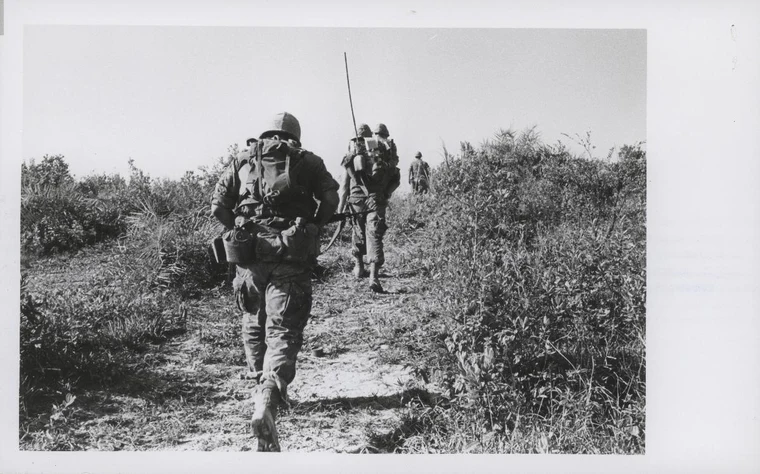
US Marines move through rice paddies during a patrol in South Vietnam. By 1968, more than 500,000 American troops were deployed in the country.. Image: US Marine Corps, via Wikimedia Commons (Public domain)
The Tet Offensive and the Vietnam War's turning point
The Tet Offensive of January 1968 marked the most significant turning point of the Vietnam War. During the Vietnamese New Year ceasefire, North Vietnamese and Viet Cong forces launched coordinated attacks on more than 100 cities and military bases across South Vietnam.
The attackers even breached the US Embassy compound in Saigon. Although American and South Vietnamese forces eventually repelled the offensive, the scale of the assault shocked the American public. For months, US officials had claimed the war was nearly won. Television footage of fighting in Saigon's streets contradicted those assurances.
Impact on American public opinion
The Tet Offensive shattered public confidence in the war effort. In February 1968, CBS news anchor Walter Cronkite declared on air that the war appeared unwinnable. President Johnson's approval rating dropped sharply. In March 1968, he announced he would not seek re-election. The Tet Offensive did not achieve its military objectives, but it succeeded as a strategic turning point by undermining American willingness to continue the war.
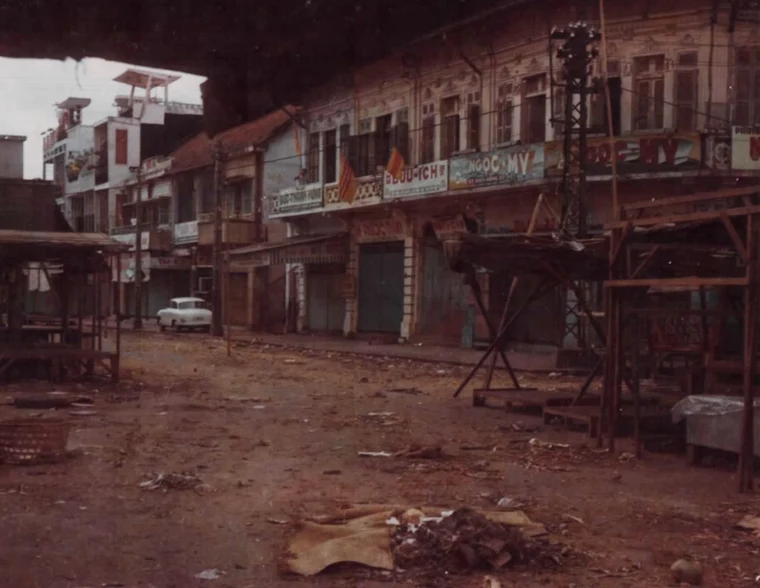
A deserted Saigon street during the Tet Offensive, January 1968 — the surprise attacks shattered American confidence in victory.. Image: U.S. Information Agency, via Wikimedia Commons (Public domain)
Did you know?
-
The Vietnam War killed an estimated 2 million Vietnamese civilians, 1.1 million North Vietnamese and Viet Cong fighters, and over 58,000 American soldiers between 1955 and 1975.
Encyclopaedia Britannica — Vietnam War -
The United States dropped approximately 7.5 million tonnes of bombs on Vietnam, Laos, and Cambodia — more than twice the total dropped by all sides during World War 2.
National Archives — Vietnam War -
Between 2 and 4 million Vietnamese people were exposed to Agent Orange, a chemical defoliant. Its health effects, including cancer and birth defects, continue to affect Vietnamese families today.
BBC News — Agent Orange
Vietnamese perspectives and the anti-war movement
Understanding the Vietnam War requires looking beyond the American experience. For the Vietnamese, this conflict was part of a longer struggle for independence that began against French colonial rule.
Many North Vietnamese and Viet Cong fighters saw themselves as nationalists fighting for reunification and self-determination, not simply as agents of communism. Ho Chi Minh's 1945 declaration of independence quoted the American Declaration of Independence and the French Declaration of the Rights of Man. Meanwhile, South Vietnamese civilians suffered enormously from both sides — caught between Viet Cong guerrilla operations and American bombing campaigns.
The global anti-war movement
The Vietnam War sparked one of the largest protest movements in modern history. In the United States, opposition grew throughout the late 1960s. University students, civil rights leaders, and veterans marched against the war. The 1970 Kent State shootings, in which National Guard troops killed four student protesters, intensified public anger. Anti-war protests also spread to Australia, France, the United Kingdom, and Japan. The Cold War context meant that the conflict had global political significance, but growing public pressure made continued escalation politically impossible.
The war deeply affected neighbouring countries as well. American bombing campaigns extended into Laos and Cambodia, destabilising both nations. The Cuban Missile Crisis had demonstrated the dangers of superpower confrontation just years earlier, and Vietnam showed that proxy wars could be equally devastating.
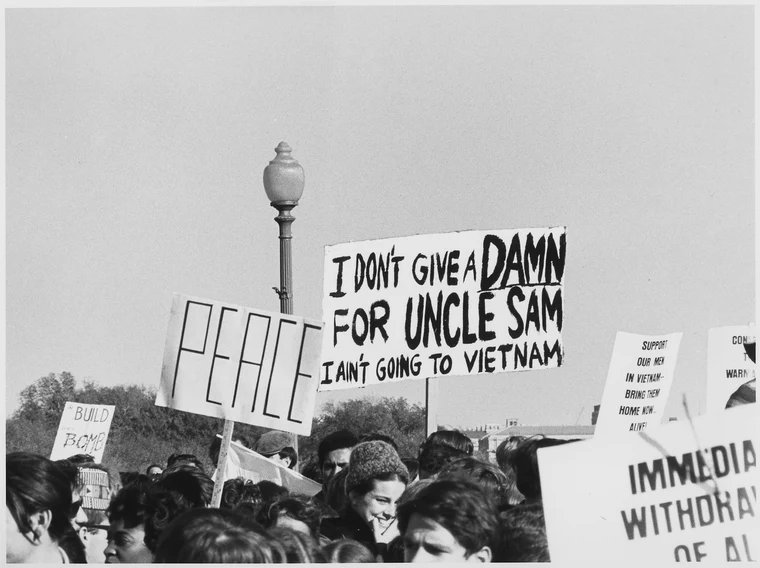
The March on the Pentagon, 21 October 1967 — over 100,000 demonstrators converged on Washington to protest the Vietnam War.. Image: Frank Wolfe / National Archives, via Wikimedia Commons (Public domain)
Frequently asked questions
- When did the Vietnam War start and end?
- The Vietnam War lasted from 1955 to 1975. Direct US military involvement began in 1965 with the deployment of combat troops and ended in 1973 with the Paris Peace Accords. Saigon fell to North Vietnamese forces on 30 April 1975, ending the war.
- Why did the United States enter the Vietnam War?
- The US entered the Vietnam War to prevent the spread of communism in Southeast Asia, following the domino theory. American leaders feared that if South Vietnam fell to communism, neighbouring countries would follow. The 1964 Gulf of Tonkin Resolution gave the president authority to use military force.
- How many people died in the Vietnam War?
- An estimated 2 million Vietnamese civilians, 1.1 million North Vietnamese and Viet Cong fighters, approximately 250,000 South Vietnamese soldiers, and over 58,000 American soldiers died during the conflict. The total death toll exceeded 3 million people.
- What was the Tet Offensive?
- The Tet Offensive was a coordinated series of surprise attacks launched by North Vietnamese and Viet Cong forces in January 1968 during the Vietnamese New Year. Although militarily unsuccessful, it turned American public opinion against the war and became a strategic turning point.
- What happened to Vietnam after the war ended?
- After Saigon fell on 30 April 1975, Vietnam was reunified under communist rule as the Socialist Republic of Vietnam. The country faced severe economic hardship, and hundreds of thousands of South Vietnamese fled as refugees. Vietnam began economic reforms known as Doi Moi in 1986.