The Structure of a Cell
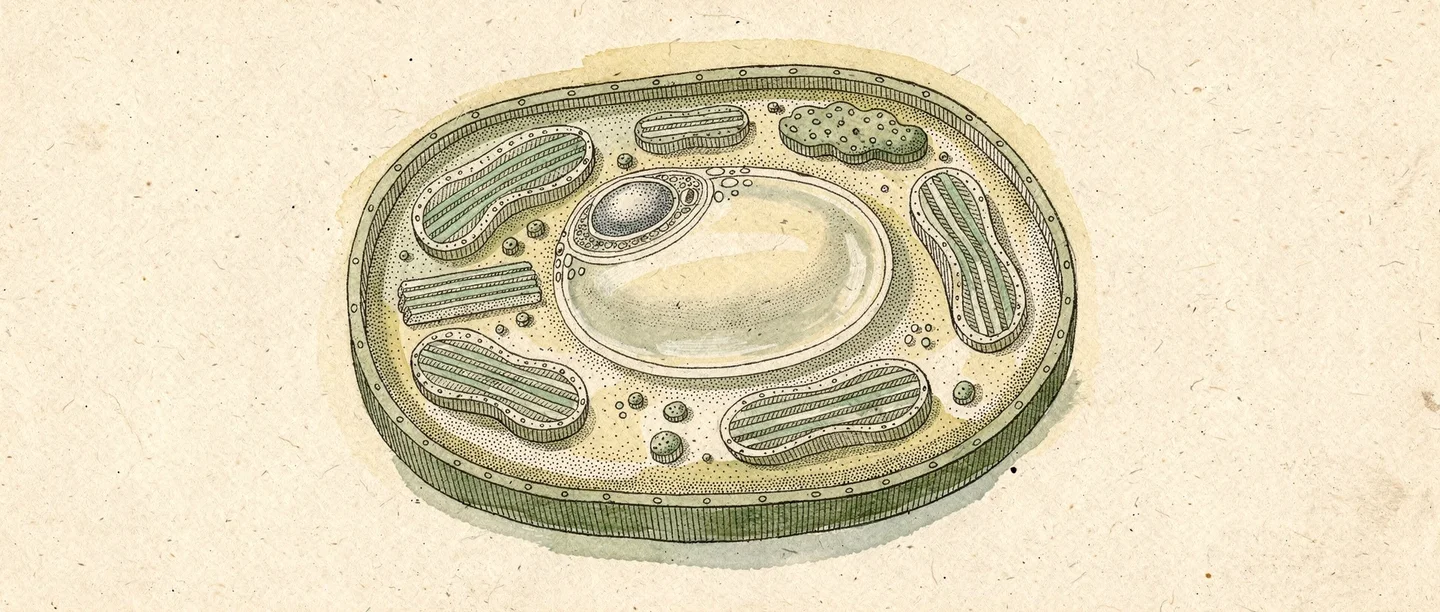
All cells share certain features, but cell structure varies between cell types and between the two main categories: prokaryotic and eukaryotic.
A prokaryotic type — found in bacteria — is simpler. It has no membrane-bound nucleus. Its genetic material floats freely inside. A eukaryotic type — found in plants, animals, and fungi — is more complex. It has a nucleus enclosed by a membrane, plus specialised compartments called organelles.
Key organelles in a eukaryotic cell
- Nucleus: the control centre, containing DNA
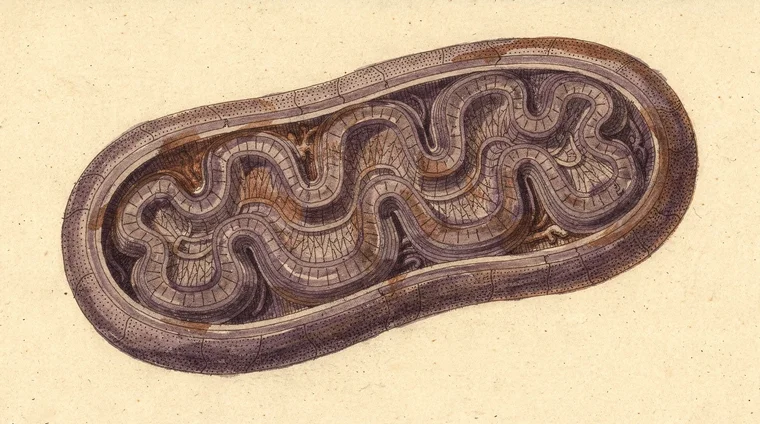
- Mitochondria: the organelle that generates energy through respiration
- Ribosome: the protein-building machinery
- Outer membrane: the flexible boundary controlling what enters and leaves
- Endoplasmic reticulum: a network for protein and lipid production
Plant cells vs animal cells
A plant type has a rigid cell wall outside its membrane, a large central vacuole for storage, and chloroplasts for photosynthesis. An animal type lacks a cell wall and chloroplasts. Photosynthesis occurs entirely within the chloroplast of a plant cell.
How a Cell Works: Energy, Proteins, and DNA
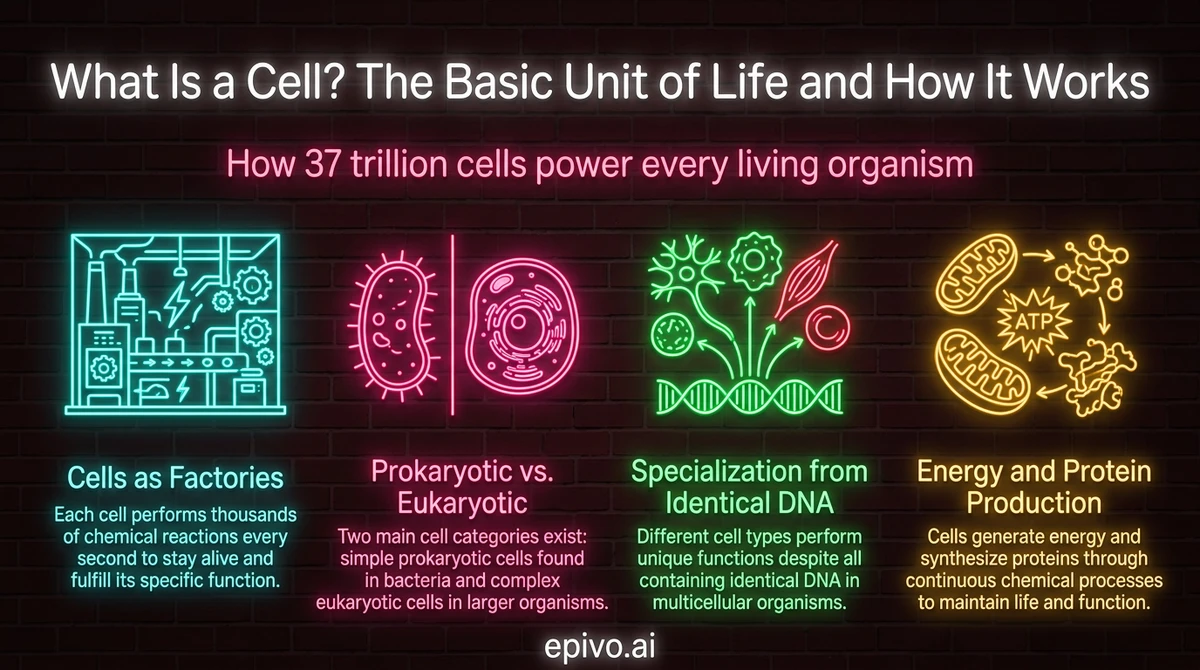
Each living unit is not just a container — it is a factory. Every one carries out thousands of chemical reactions every second to stay alive and perform its function.
Energy production
Most cells generate energy through cellular respiration — a series of reactions in the mitochondria that convert glucose and oxygen into ATP (adenosine triphosphate), the molecule that powers almost every cellular process.
Protein synthesis
Proteins are the cell's main working molecules. Each cell reads instructions from its DNA and uses ribosomes to assemble amino acids into proteins. The protein a cell makes determines what it can do — muscle tissue builds contractile proteins, nerve tissue builds signalling proteins.
DNA and the cell cycle
Every cell contains a complete copy of an organism's DNA. When a cell divides, it first copies all its DNA precisely, then splits into two daughter cells, each receiving an identical copy. This cycle — growth, DNA copying, division — is how organisms grow and repair themselves. Errors in the cycle can lead to cancer, where cells divide uncontrollably.
Specialised Cells and Multicellular Life
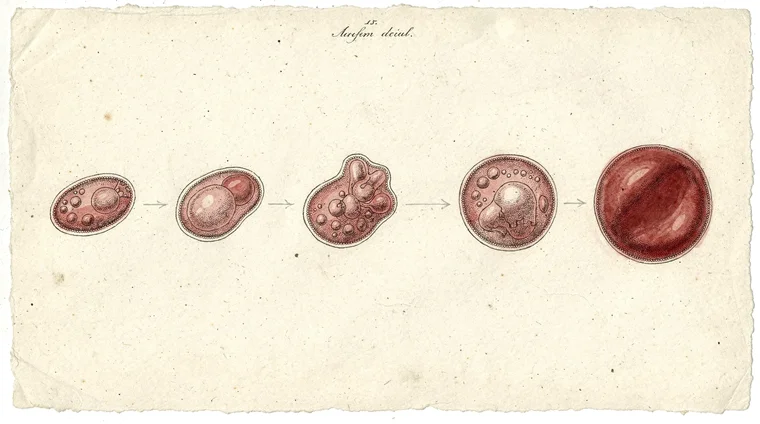
In a multicellular organism, different cell types are specialised for specific functions — even though all cells in the same organism contain identical DNA.
Differentiation
The process by which each unit develops into a specific type is called differentiation. A stem type can become a red blood cell, a neuron, or a liver type, depending on which genes are switched on. Red blood cells are shaped like biconcave discs to maximise surface area for carrying oxygen. Neurons have long extensions to transmit electrical signals over distances.
Tissues and organs
Groups of similar cells working together form tissues. Muscle tissue, skin tissue, and nerve tissue are all collections of specialised cells. Tissues combine to form organs — the heart, liver, and brain are all made of multiple tissue types working together. Understanding how the human body works means understanding how cells, tissues, and organs coordinate.
Single-celled life
Not all life is multicellular. Bacteria and many protists consist of just one cell, which must carry out all life functions independently. Single-celled organisms are the most abundant life forms on Earth.
Frequently asked questions
- What is the smallest type of cell?
- Mycoplasma genitalium is one of the smallest known cells, about 200 nanometres across. It is a parasitic bacterium with a stripped-down genome — only about 470 genes. By comparison, a typical human cell is 10 to 20 micrometres across — larger, but still invisible to the naked eye. The human egg is the largest single cell in the body.
- How does a cell know what to do?
- Behaviour is governed by DNA and the signals received from the surrounding environment. Genes are switched on or off depending on the cell type and situation. Chemical signals from neighbouring cells and hormones from the bloodstream all influence which proteins a cell produces. Gene regulation determines whether growth, division, or specialised function occurs.
- What happens when a cell dies?
- Cells die in two main ways. Apoptosis is programmed death — a controlled process in which the unit tidily dismantles itself. It is normal and necessary for development and tissue maintenance. Necrosis is uncontrolled cell death caused by injury or disease. In either case, the components are broken down and recycled by the body.
- Can cells exist outside the body?
- Yes — living material can be grown in laboratories in nutrient-rich liquid called culture medium. Scientists use cell cultures to study disease, test drugs, and produce vaccines. Some cultures have been maintained for decades; the HeLa line, derived from a cancer patient in 1951, is still widely used in research worldwide today.