What the Big Bang theory actually says
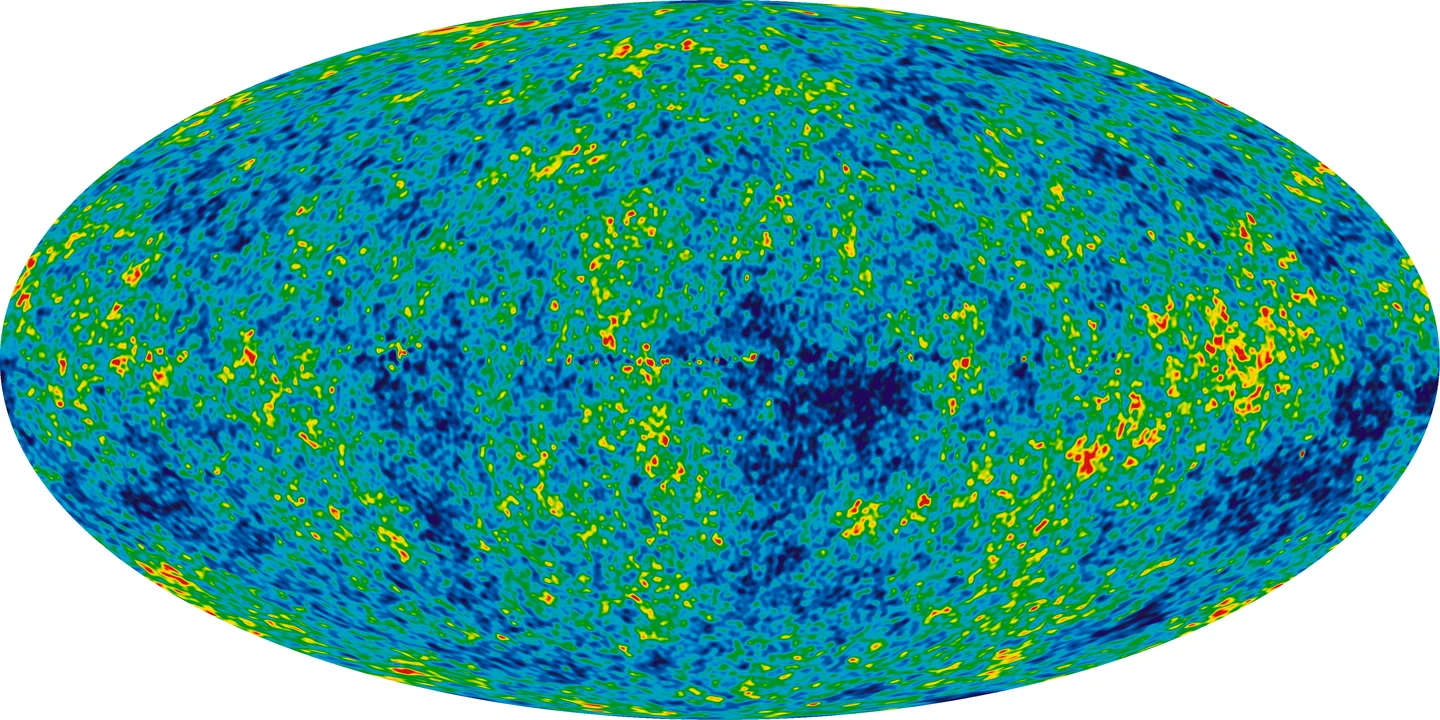
The Big Bang theory says the universe began about 13.8 billion years ago from an extremely hot, dense state. It has been expanding ever since. It does not describe an explosion in empty space — it describes space itself expanding in all directions.
Run that expansion backward and everything converges to a single point. Three independent lines of evidence support this picture. First, every distant galaxy is moving away from us — space is stretching. Second, a faint glow fills all of space called the cosmic microwave background, which matches predictions perfectly. Third, the proportions of hydrogen and helium match exactly what physics predicts for the first three minutes after the Big Bang. When three separate measurements all point to the same answer, scientists call that convergence — and it is the gold standard of evidence.
The theory was built over a century by many researchers, not invented by one person. Physicist Georges Lemaître first proposed the idea of an expanding universe with a beginning in 1931, drawing on Einstein's equations. Edwin Hubble confirmed galaxies were flying apart. Each step added confidence through NASA's WMAP satellite data and decades of peer review.
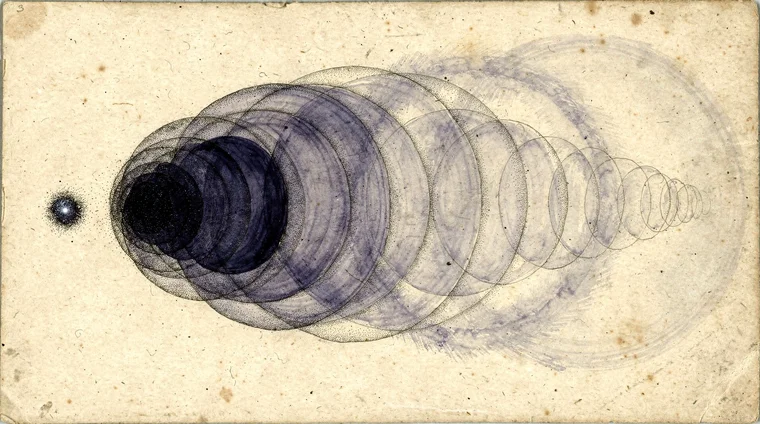
Image: Generated with AI (Epivo)
What happened in the first moments after the Big Bang
In the very first second after the Big Bang, the universe reached about ten billion degrees. That is far too hot for atoms to exist. At that temperature, matter breaks apart into its smallest constituents: quarks and gluons, forming a state we call a quark-gluon plasma. Scientists can briefly recreate this state today in particle colliders at CERN.
As the universe expanded, it also cooled. Within the first three minutes, quarks locked together into protons and neutrons. Those particles then fused into the nuclei of hydrogen and helium. The result was precise: about 75 percent hydrogen and 25 percent helium. Physicists calculated this ratio from nuclear reaction rates in the 1960s. When astronomers later measured hydrogen and helium in ancient gas clouds, the numbers matched the prediction with stunning accuracy.
For the next 380,000 years, the universe remained a hot plasma. Photons could not travel freely because free electrons scattered them in every direction. Then the temperature dropped enough for electrons to settle into orbits around nuclei, forming the first atoms. Suddenly, light could travel freely. That ancient light is still traveling today. Stretched by expansion into microwaves, it fills the entire sky at 2.7 degrees above absolute zero.
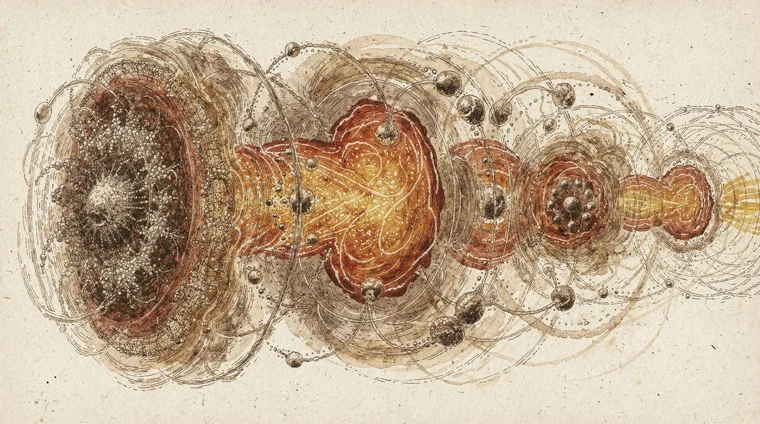
Image: Generated with AI (Epivo)
How the cosmic microwave background confirmed the Big Bang
The cosmic microwave background (CMB) is often called the oldest photograph of the universe. It is the direct afterglow of the Big Bang. About 380,000 years in, the first atoms formed and light streamed free.
In 1965, two engineers named Arno Penzias and Robert Wilson were testing a radio antenna at Bell Labs in New Jersey. No matter where they pointed it, they picked up a faint, steady hiss. They cleaned pigeon droppings off the antenna. The hiss remained. Meanwhile, at nearby Princeton University, a separate team had predicted exactly this signal. When Penzias called them, the Princeton group immediately understood what had happened. Penzias and Wilson had accidentally discovered the CMB. They received the 1978 Nobel Prize in Physics for a discovery they had not set out to make.
The CMB is not just confirmation that the Big Bang happened. Its tiny temperature variations map the early universe's structure — the seeds of every galaxy and star that formed afterward. Furthermore, the European Space Agency's Planck satellite confirmed the universe is geometrically flat, another key prediction of the theory.
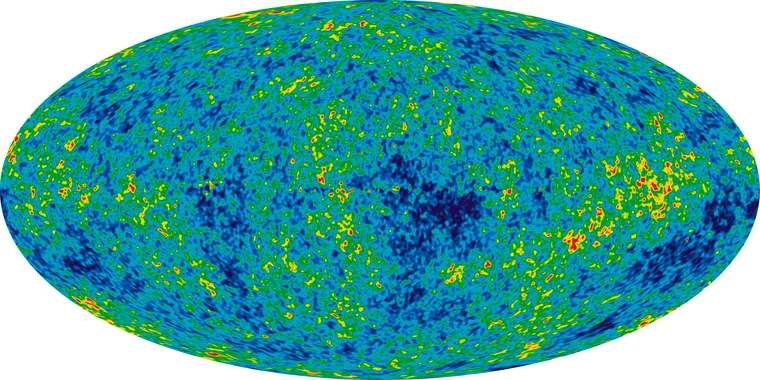
The cosmic microwave background as mapped by NASA's WMAP satellite. The color variations represent temperature fluctuations of just one hundred-thousandth of a degree, yet these tiny differences mark the seeds from which all galaxies and galaxy clusters eventually formed.. Image: NASA / WMAP Science Team, via Wikimedia Commons (Public domain)
What the Big Bang theory does not explain — and open questions
The Big Bang theory is well-established, however it does not explain everything. In particular, it does not describe what caused the initial conditions or what, if anything, existed before the Big Bang began.
One important addition to the theory is called inflation. In 1980, physicist Alan Guth proposed that the universe expanded exponentially in its first tiny fraction of a second. A region smaller than an atom inflated to larger than a grapefruit almost instantaneously. Inflation solves a puzzle called the horizon problem: why does the sky look the same in every direction, even in regions that could never have been in contact with each other? Inflation says that all those regions came from the same tiny, uniform patch.
Additionally, cosmology faces deeper open questions. What is dark matter, which makes up about 27 percent of the universe's content? What is dark energy, which drives the accelerating expansion and accounts for roughly 68 percent of everything? Why does matter exist at all, given that equal amounts of matter and antimatter should have annihilated each other at the start? These are active research frontiers, not fringe questions. The Big Bang theory provides a firm foundation, but the full story of the universe is still being written.
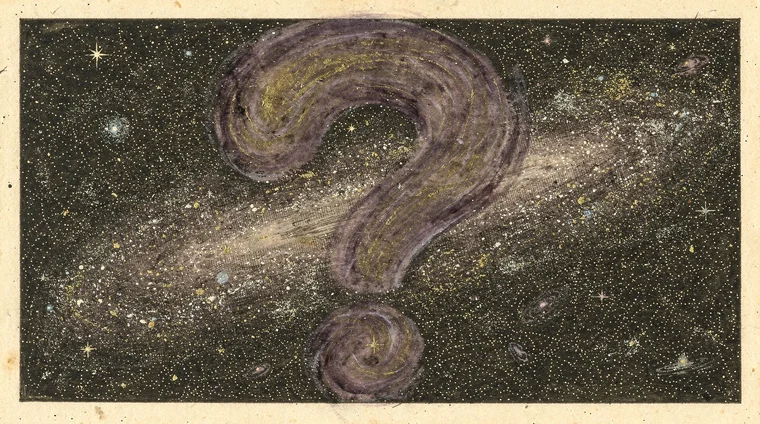
Image: Generated with AI (Epivo)
Did you know?
-
The universe is about 13.8 billion years old. Its age is calculated from the expansion rate and the temperature of the cosmic microwave background, and is now known to within about one percent.
NASA WMAP. Tests of Big Bang Cosmology -
Within the first three minutes after the Big Bang, about 75 percent of ordinary matter became hydrogen and 25 percent became helium. This ratio matches what physicists predicted from nuclear reaction rates decades before astronomers confirmed it.
Particle Data Group. Big Bang Nucleosynthesis. Review of Particle Physics, 2022 -
The cosmic microwave background was discovered accidentally in 1965 by two Bell Labs engineers who noticed an unexplained hiss in their antenna. Arno Penzias and Robert Wilson won the 1978 Nobel Prize in Physics for the discovery.
Nobel Prize in Physics 1978. NobelPrize.org
How students can learn more about the Big Bang and cosmology
Cosmology can feel abstract because the scales involved — billions of years, billions of light-years — are hard to grasp. However, the underlying ideas are accessible at any age. The key is a patient guide who answers questions in real time and adjusts to the learner's level.
Students curious about the Big Bang theory can explore Epivo's International Curriculum, which teaches science from Grade 1 to Grade 12. Each lesson adapts to what the student already knows, so beginners and advanced learners both find the right entry point. Parents can visit our page for parents to learn how Epivo works alongside school learning.
Image: Generated with AI (Epivo)
Frequently asked questions
- What is the Big Bang theory in simple terms?
- The Big Bang theory says the universe began about 13.8 billion years ago from an extremely hot, dense state and has been expanding ever since. It is supported by three independent pieces of evidence: the expansion of galaxies, the cosmic microwave background, and the measured ratio of hydrogen to helium in the universe.
- Is the Big Bang theory just a guess?
- No. The Big Bang theory has survived more than 60 years of rigorous testing. Three separate lines of evidence — galaxy expansion, the cosmic microwave background, and the hydrogen-helium ratio — all independently confirm it. In science, a theory is an explanation with strong evidential support, not a speculation.
- What existed before the Big Bang?
- Physics as we know it breaks down at the moment of the Big Bang, so this question cannot currently be answered. Time itself may have begun with the Big Bang. Some physicists explore ideas like eternal inflation or a cyclic universe, but these remain speculative. It is one of the biggest open questions in science.
- What is the cosmic microwave background?
- The cosmic microwave background is ancient light released 380,000 years after the Big Bang, when the universe cooled enough for the first atoms to form. It has been stretched by expansion into microwaves and now fills the entire sky uniformly at 2.7 degrees above absolute zero. It is the strongest single piece of evidence for the Big Bang.
- How old is the universe according to the Big Bang theory?
- The universe is approximately 13.8 billion years old. Scientists calculate this from the current expansion rate of the universe and the temperature of the cosmic microwave background. The uncertainty in this figure is less than one percent, making it one of the most precisely measured numbers in cosmology.
- Does the Big Bang theory explain where matter came from?
- The Big Bang theory explains how the matter we observe today formed from a hot, dense early state, but it does not fully explain why matter exists at all. Equal amounts of matter and antimatter should have formed and annihilated each other. Why a tiny excess of matter survived is still an unsolved problem in physics.