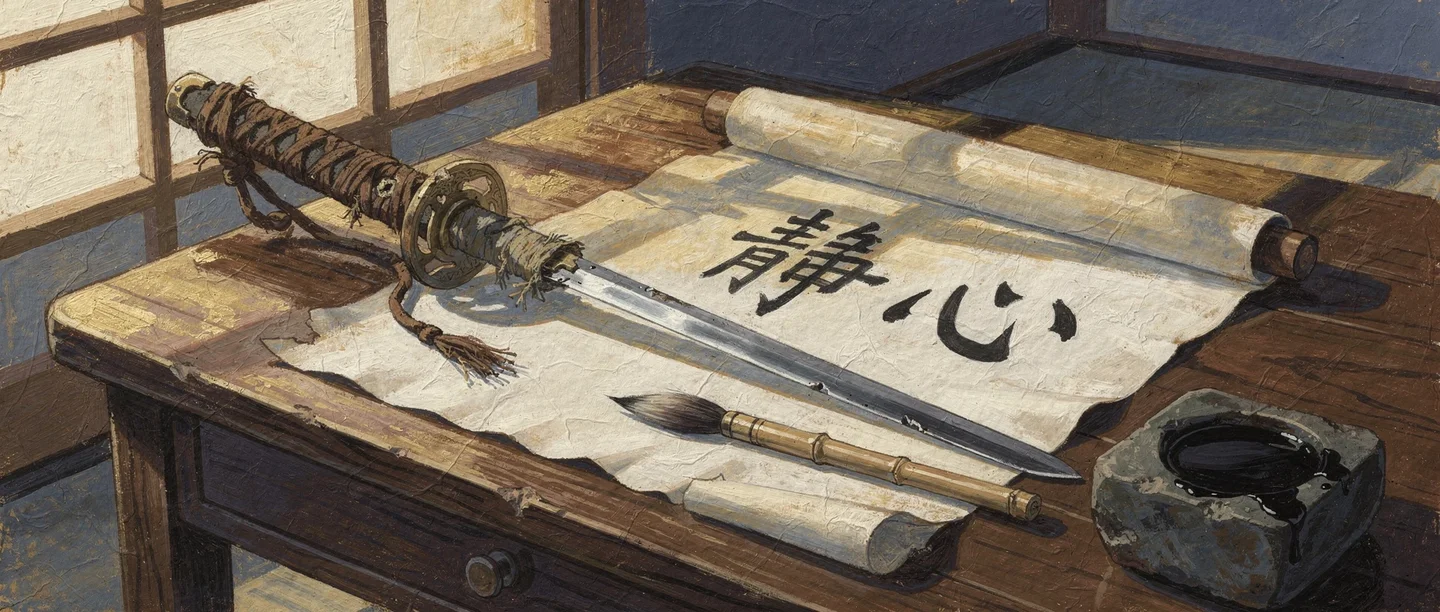
Origins of Bushido in feudal Japan
Bushido developed gradually over several centuries alongside the rise of the samurai class. It was not a single written code but rather a set of ideals that evolved through practice, tradition, and the influence of three major belief systems.
The samurai first emerged as a military class during the late Heian period (794-1185). As Japan entered the Kamakura period (1185-1333), the samurai gained political power when the Minamoto clan established the first shogunate — a military government led by a shogun rather than the emperor. With political authority came the need for a moral framework. Warriors needed rules not just for battle, but for governance and daily conduct.
Three philosophical traditions shaped this emerging code. Zen Buddhism contributed the practice of meditation, mental discipline, and acceptance of death. Confucianism provided ideas about loyalty, duty, and the proper ordering of social relationships. Shinto, Japan's indigenous religion, added reverence for ancestors, love of the natural world, and devotion to the emperor.
Together, these influences produced a warrior ethic that demanded far more than skill with a sword. A true samurai was expected to cultivate learning, practice self-discipline, and serve his lord with absolute loyalty. Over time, the ideal of the warrior-scholar became central to samurai identity.
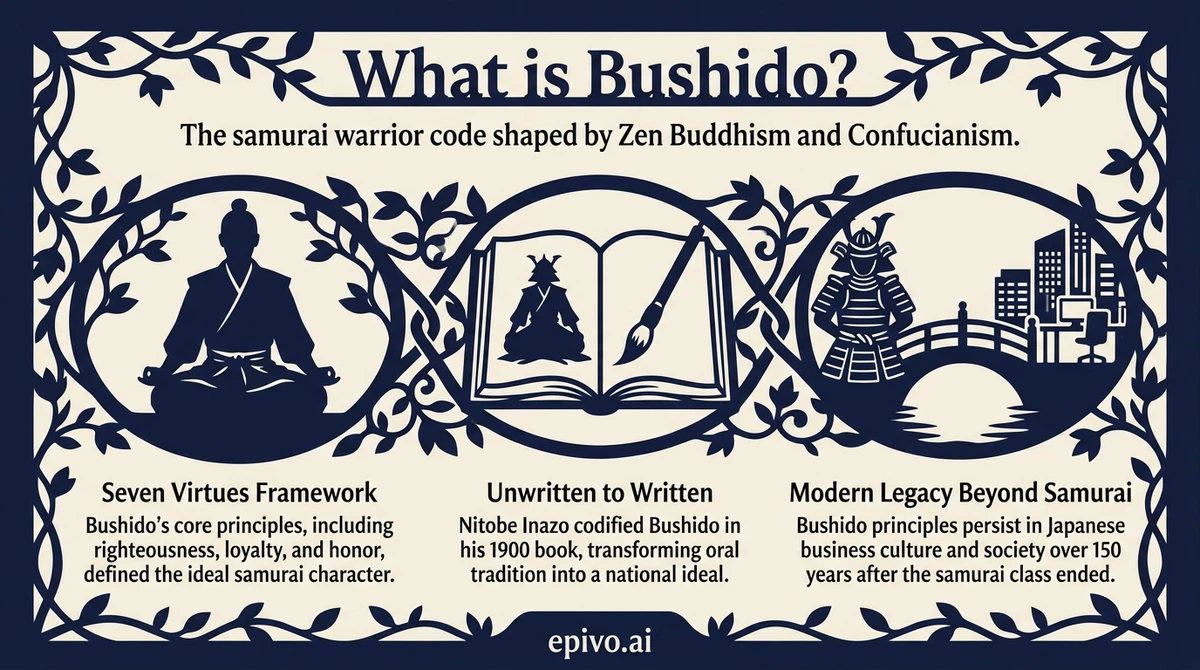
The seven virtues of Bushido
At the core of the warrior code are seven virtues. These principles defined the ideal samurai character and provided a framework for honourable conduct in all areas of life.
- Gi (righteousness) — The most important virtue. A samurai must act with moral correctness, choosing the just path even when it is difficult. Righteousness means making decisions based on principle, not personal advantage.
- Yu (courage) — True courage is not recklessness. It means acting bravely when action is right, while knowing when restraint is wiser. Confucius taught that courage without righteousness leads to disorder.
- Jin (benevolence) — A warrior with power has a duty to show mercy and compassion. Benevolence balances the harshness of military life with genuine care for others.
- Rei (respect) — Proper manners and politeness are not signs of weakness. They reflect inner discipline. A samurai treats everyone — from lords to servants — with appropriate courtesy.
- Makoto (honesty) — A samurai's word must be trustworthy. Speaking and acting with sincerity removes the need for written contracts. When a samurai makes a promise, it is already done.
- Meiyo (honour) — Honour is a samurai's most prized possession. It governs every decision and action. Losing honour was considered worse than losing one's life.
- Chugi (loyalty) — Devotion to one's lord is absolute. Loyalty binds the entire feudal system together and demands that a samurai serve faithfully, even at great personal cost.
These virtues were not merely aspirational. They carried real consequences. A samurai who violated the code could face exile, the loss of his status, or the expectation that he would perform seppuku (ritual suicide) to restore his honour.
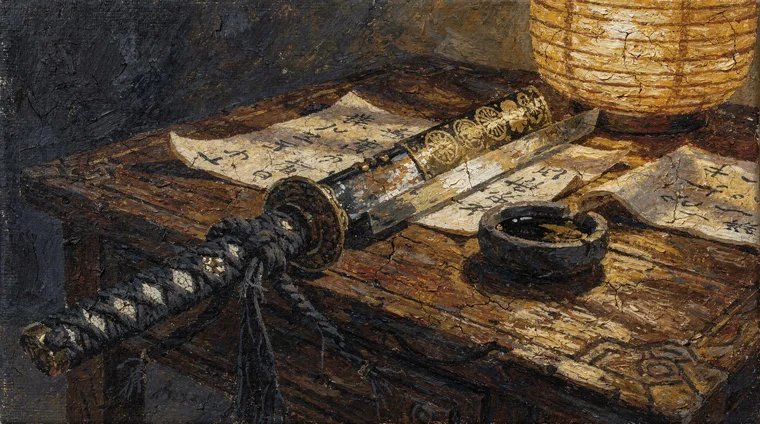
Nitobe, the Meiji era, and Bushido as a national ideal
For most of its history, Bushido was an unwritten set of customs passed from master to student. That changed in 1900 when Nitobe Inazo, a Japanese educator and diplomat, published Bushido: The Soul of Japan in English. The book presented the warrior code as the moral foundation of Japanese civilisation, comparable to chivalry in medieval Europe.
Nitobe wrote for a Western audience at a time when Japan was rapidly modernising. The Meiji Restoration (1868) had abolished the feudal system and formally ended the samurai class. The new government built a modern army, industrial economy, and constitutional government based on Western models. In this context, Nitobe's book served a dual purpose: it preserved samurai ideals for Japanese readers and explained Japanese values to the outside world.
However, Nitobe's version of Bushido was selective. He emphasised virtues like honour and self-sacrifice while downplaying the code's harsher elements. Historians note that the historical reality of samurai life was often brutal, and many samurai fell short of the ideals attributed to them. The concept of a unified "Bushido code" is itself partly a modern construction — a romanticised narrative that smooths over centuries of diverse and sometimes contradictory warrior traditions.
During the early 20th century, the Japanese government used Bushido to promote nationalism and military obedience. Concepts like loyalty and self-sacrifice were reinterpreted to serve the state. This appropriation reached its peak during World War 2, when Bushido rhetoric was used to justify kamikaze attacks and the expectation that soldiers would die rather than surrender.

A lasting legacy in modern Japan
Despite the end of the samurai class over 150 years ago, Bushido's influence remains visible in modern Japanese society and beyond.
In Japanese business culture, values such as loyalty to one's company, respect for hierarchy, and dedication to craftsmanship echo Bushido principles. The concept of kaizen (continuous improvement) in manufacturing reflects the samurai ideal of lifelong self-cultivation. Japanese martial arts — kendo, judo, aikido — explicitly trace their ethical frameworks back to the warrior code.
In education, the emphasis on discipline, perseverance, and respect for teachers aligns closely with Bushido's moral framework. Students across Japan participate in martial arts as part of their school curriculum, learning not just physical techniques but the ethical principles behind them.
At the same time, a critical perspective is important. Historians increasingly distinguish between the historical practices of actual samurai and the idealised code promoted by writers like Nitobe. The samurai were a privileged military aristocracy, and their code served to justify that privilege. Romanticising Bushido without acknowledging its role in maintaining rigid social hierarchies — and its later use to promote militarism — gives an incomplete picture.
For students today, Bushido is best understood as one of many warrior ethics traditions that attempted to impose moral order on the use of force. Comparing it with European chivalry, Confucian ideals of the gentleman-scholar, or African philosophies of communal responsibility gives a fuller understanding of how different civilisations have answered the same fundamental question: what does it mean to act with honour?
Did you know?
-
The word 'samurai' comes from the Japanese verb 'saburau,' meaning 'to serve.' At the height of the feudal period, samurai made up roughly 5-7% of Japan's population.
Encyclopaedia Britannica — Samurai -
Nitobe Inazo's 1900 book 'Bushido: The Soul of Japan' was originally written in English and became an international bestseller, influencing how both Japanese and Western audiences understood the samurai code.
Project Gutenberg — Bushido: The Soul of Japan -
The Meiji government abolished the samurai class in 1876 by banning the wearing of swords in public (the Haitōrei edict), ending a warrior tradition that had lasted over 700 years.
Stanford Encyclopedia of Philosophy — Japanese Philosophy
Frequently asked questions
- Was Bushido a written code?
- Not originally. Bushido developed as an unwritten set of customs and expectations passed down through samurai families and martial schools. The first major written account was Nitobe Inazo's 1900 book, which codified and somewhat idealised the tradition for a modern audience.
- What is the relationship between Bushido and Zen Buddhism?
- Zen Buddhism taught samurai mental discipline, meditation, and acceptance of death — qualities essential for warriors. Zen's emphasis on direct experience and calm under pressure became central to Bushido's spiritual dimension.
- Did all samurai follow Bushido?
- In practice, no. Like any moral code, Bushido was an ideal that many samurai fell short of. Historical records show samurai engaging in betrayal, cruelty, and self-interest. The unified code we know today is partly a later construction.
- How is Bushido different from European chivalry?
- Both codes governed a warrior class. Chivalry emphasised Christian piety and courtly love, while Bushido drew from Zen Buddhism and Confucianism. Bushido placed greater emphasis on loyalty to one's lord and acceptance of death.
- Is Bushido still practised in Japan today?
- Not as a formal code, but its values — discipline, respect, loyalty, and honour — remain influential in Japanese martial arts, business culture, and education. Many Japanese people identify with Bushido's principles as part of their cultural heritage.