What was the space race and why did it begin?
The space race began as an extension of the Cold War rivalry between the two global superpowers. Both nations saw space exploration as a way to prove the superiority of their political systems — capitalism versus communism.
After World War 2, the United States and the Soviet Union recruited German rocket scientists to develop missile technology. Most notably, the US brought Wernher von Braun to lead its rocket programme. As a result, both countries built powerful rockets capable of carrying nuclear warheads across continents. However, these same rockets could also launch objects into orbit.
Sputnik changes everything
On 4 October 1957, the Soviet Union launched Sputnik 1 — the first artificial satellite to orbit Earth. The small metal sphere, weighing just 83 kilograms, circled the planet every 96 minutes and transmitted a simple radio beep. According to NASA's history division, the launch shocked the American public and government. If the Soviets could put a satellite in orbit, they could potentially deliver a nuclear weapon anywhere on the planet.
The American media called the reaction "Sputnik crisis." In response, the United States accelerated its own space programme. Congress created the National Aeronautics and Space Administration (NASA) in 1958, and federal funding for science education surged. The space race had officially begun.
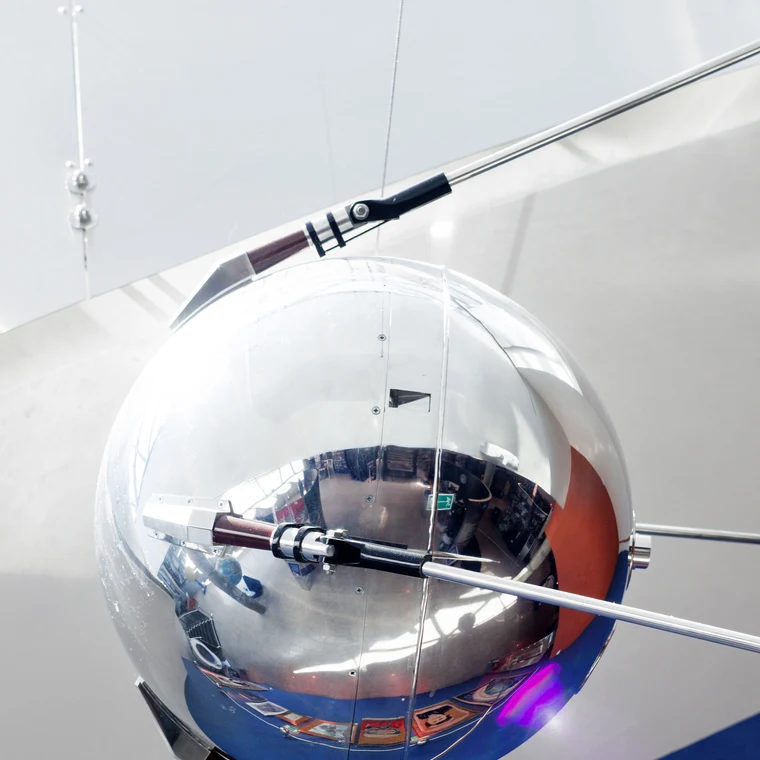
A replica of Sputnik 1, the Soviet satellite launched on 4 October 1957. Its successful orbit marked the beginning of the space race and stunned the Western world.. Image: NASA, via Wikimedia Commons (Public domain)
Early Soviet victories in the space race
The Soviet Union dominated the early years of the space race with a series of historic firsts. Each achievement intensified pressure on the United States to respond.
In November 1957, the Soviets launched Sputnik 2, carrying a dog named Laika — the first living creature to orbit Earth. Then, on 12 April 1961, cosmonaut Yuri Gagarin became the first human in space. His Vostok 1 spacecraft completed a single orbit of Earth in 108 minutes. According to Encyclopaedia Britannica, the flight made Gagarin an international hero and a powerful symbol of Soviet technological prowess.
Kennedy raises the stakes
Gagarin's flight alarmed the United States. Just weeks later, on 25 May 1961, President John F. Kennedy addressed Congress and set a bold goal: landing a man on the Moon and returning him safely before the end of the decade. This commitment transformed the space race from a series of incremental achievements into a focused sprint toward the Moon.
Meanwhile, the Cuban Missile Crisis of 1962 further heightened Cold War tensions. Proving technological dominance in space became more urgent than ever for both sides.
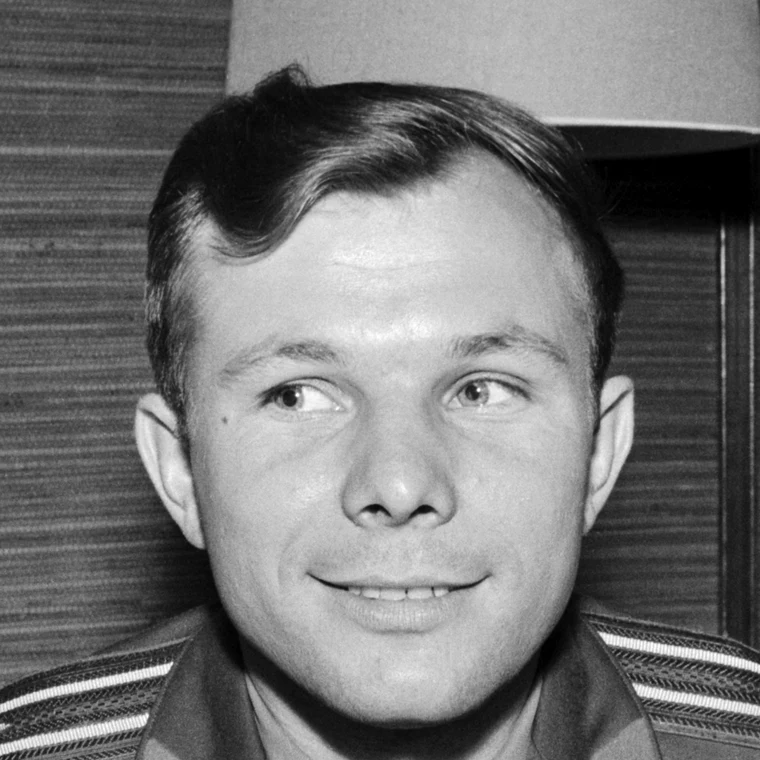
Yuri Gagarin prepares for the Vostok 1 mission on 12 April 1961. His flight made him the first human in space and gave the Soviet Union a major lead in the space race.. Image: RIA Novosti, via Wikimedia Commons (CC BY-SA 3.0)
Apollo 11 and the Moon landing
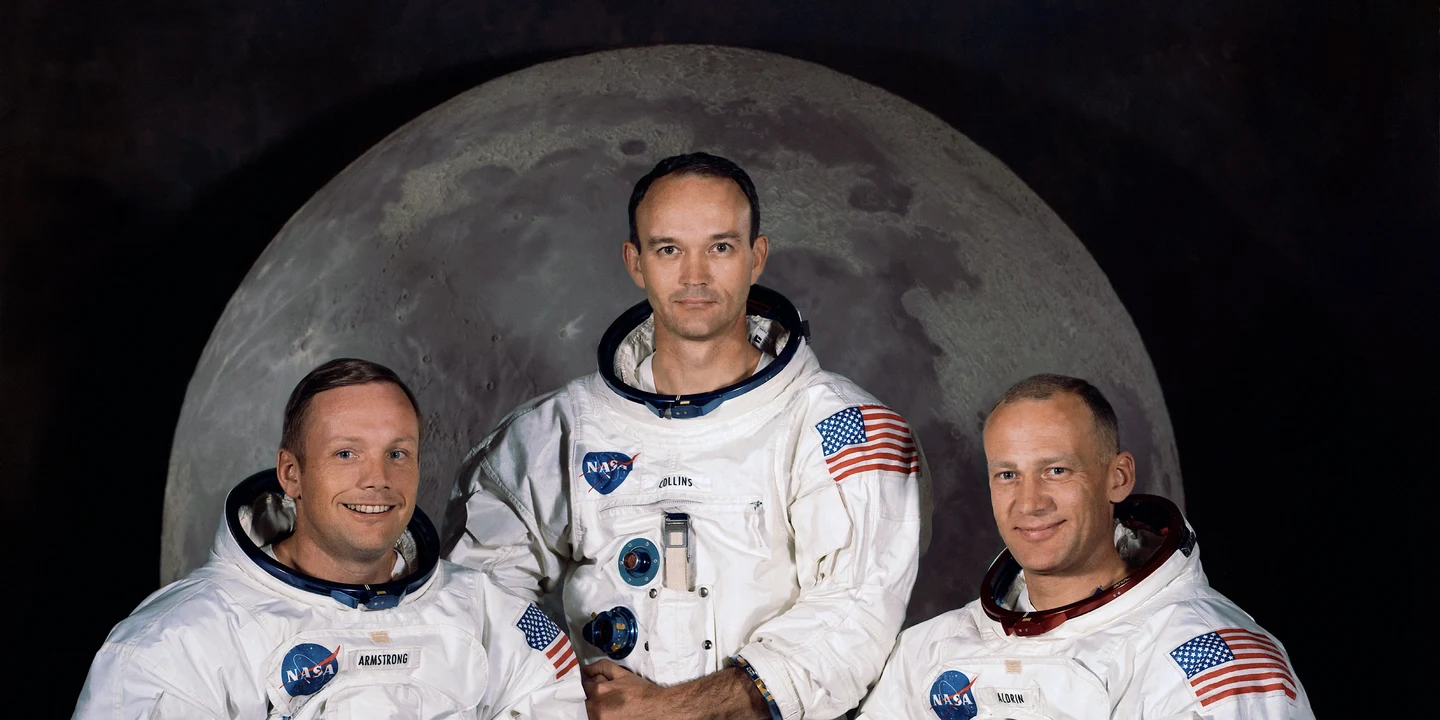
NASA's Apollo programme achieved what many considered impossible. On 20 July 1969, astronauts Neil Armstrong and Buzz Aldrin landed on the Moon while Michael Collins orbited above in the command module.
Armstrong's first words as he stepped onto the lunar surface became one of the most famous sentences in history: "That's one small step for man, one giant leap for mankind." An estimated 600 million people worldwide watched the event on television. For many, the Moon landing represented the defining moment of the entire space race.
How NASA reached the Moon
The Apollo programme built on years of earlier missions. The Mercury programme (1958-1963) proved humans could survive in space. The Gemini programme (1965-1966) tested spacewalks and orbital docking — skills essential for a lunar mission. Apollo missions 7 through 10 rehearsed every phase of a Moon landing before Apollo 11 attempted the real thing.
The achievement came at enormous cost. NASA's budget peaked at roughly 4.4% of federal spending in 1966, and over 400,000 engineers and scientists worked on the programme. Tragedy also struck when three astronauts died in the Apollo 1 fire during a launch rehearsal in January 1967. Despite these setbacks, the programme pressed forward and met Kennedy's deadline with five months to spare.
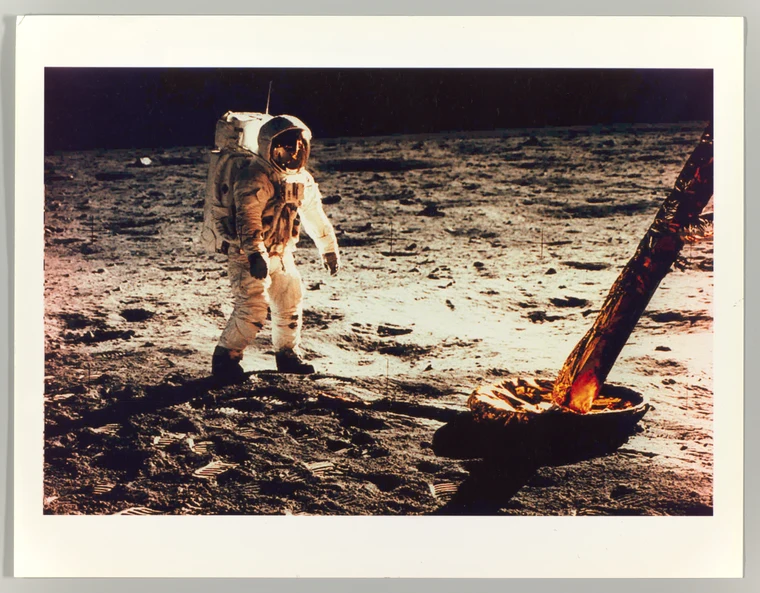
Buzz Aldrin walks on the lunar surface on 20 July 1969. This photograph, taken by Neil Armstrong, is one of the most iconic images of the 20th century.. Image: NASA, via Wikimedia Commons (Public domain)
Did you know?
-
Sputnik 1, launched on 4 October 1957, was the first artificial satellite to orbit Earth. It weighed 83.6 kilograms and completed one orbit every 96.2 minutes at a speed of 29,000 kilometres per hour.
NASA — Sputnik and the Dawn of the Space Age -
Yuri Gagarin's Vostok 1 flight on 12 April 1961 lasted just 108 minutes, yet it made him the first human to travel in space and orbit Earth — a milestone the Soviet Union celebrated as proof of communist achievement.
Encyclopaedia Britannica — Space Race -
The Apollo 11 Moon landing on 20 July 1969 was watched by an estimated 600 million television viewers worldwide — roughly 20% of the global population at the time.
NASA — Apollo 11 Mission Overview
How the space race shaped the modern world
The space race produced far more than flags on the Moon. It transformed technology, education, and international relations in ways that still affect daily life today.
Satellite technology developed during the space race now supports GPS navigation, weather forecasting, and global communications. In addition, NASA research led to advances in materials science, computing, and medical imaging. The competition also drove both the United States and the Soviet Union to invest heavily in science education, producing a generation of engineers and researchers who went on to shape modern technology.
From rivalry to cooperation
Politically, the space race also opened the door to international cooperation. In 1975, American and Soviet spacecraft docked in orbit during the Apollo-Soyuz Test Project — the first international crewed space mission. This spirit of collaboration eventually led to the International Space Station, where astronauts from many nations work together today.
The Berlin Wall fell in 1989, and the Cold War ended soon after. However, the technologies and scientific partnerships born from the space race continue to shape exploration beyond Earth. Understanding what was the space race helps explain how Cold War competition produced lasting benefits for all of humanity.
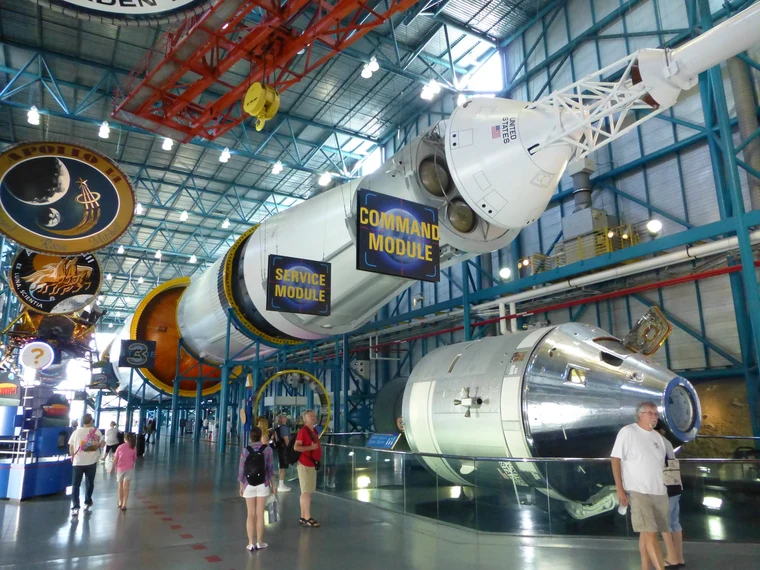
A Saturn V rocket lifts off from Kennedy Space Centre. Standing 111 metres tall, it remains the most powerful rocket ever successfully flown and was central to NASA's Apollo programme.. Image: NASA, via Wikimedia Commons (Public domain)
Frequently asked questions
- Who won the space race?
- The United States is generally considered the winner because it achieved the primary goal of landing humans on the Moon in 1969. However, the Soviet Union achieved many firsts, including the first satellite, the first human in space, and the first spacewalk.
- When did the space race start and end?
- The space race began on 4 October 1957 with the Soviet launch of Sputnik 1. It effectively ended on 20 July 1969 when Apollo 11 landed on the Moon, though some historians extend it to the 1975 Apollo-Soyuz mission.
- Why was the space race important during the Cold War?
- The space race allowed the United States and Soviet Union to demonstrate technological and ideological superiority without direct military conflict. Achievements in space served as propaganda victories and proved the capability to build advanced missiles.
- How many Apollo missions landed on the Moon?
- Six Apollo missions successfully landed astronauts on the Moon: Apollo 11, 12, 14, 15, 16, and 17. Apollo 13 was planned as a lunar landing but returned to Earth after an oxygen tank exploded en route. In total, 12 astronauts walked on the Moon.
- What technology came from the space race?
- The space race produced satellite communications, weather forecasting systems, GPS navigation, freeze-dried food, memory foam, water purification systems, and advances in computing and medical imaging. Many everyday technologies trace their origins to NASA research.