The Manhattan Project and the race to build the bomb
The atomic bomb grew out of the Manhattan Project, a secret US-led programme that ran from 1942 to 1945. Fear that Nazi Germany might develop nuclear weapons first drove the project's creation.
In 1939, physicist Albert Einstein signed a letter to President Franklin D. Roosevelt warning that recent advances in nuclear physics could lead to a devastating new weapon. Roosevelt authorised research, and by 1942 the effort had expanded into a massive industrial operation spanning more than 30 sites across the United States. According to the Atomic Heritage Foundation, the project employed over 125,000 people and cost nearly $2 billion — equivalent to roughly $28 billion today.
J. Robert Oppenheimer led the scientific team at Los Alamos, New Mexico. On 16 July 1945, they detonated the first nuclear device in the Trinity test. The blast was visible from 200 miles away. Germany had already surrendered two months earlier, in May 1945. However, the war against Japan continued, and attention turned to whether the new weapon should be used in the Pacific.
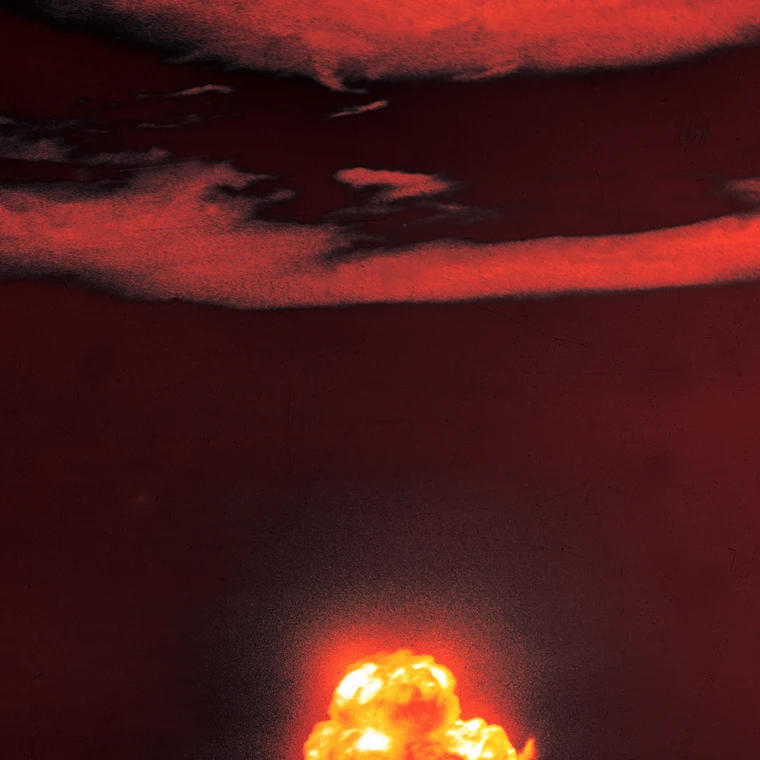
The Trinity test on 16 July 1945 proved that the atomic bomb worked. Scientists watched from bunkers as the blast created a mushroom cloud that rose 12 kilometres into the sky.. Image: Jack Aeby, via Wikimedia Commons (Public domain)
Why was the atomic bomb dropped on Japan?
President Harry Truman authorised the use of the atomic bomb primarily to end the war quickly and avoid a full-scale invasion of Japan. Military planners estimated that such an invasion could cost hundreds of thousands of American and Japanese lives.
By mid-1945, the United States had already fought brutal campaigns across the Pacific, including the battles of Iwo Jima and Okinawa. At Okinawa alone, over 12,000 American soldiers and an estimated 100,000 Japanese troops died. Tens of thousands of civilians also perished. These staggering losses shaped the decision to use the bomb. As the National WWII Museum documents, US military leaders feared that invading Japan's home islands would produce far greater casualties on both sides.
Japan's military leadership had repeatedly refused to accept unconditional surrender. Truman and his advisors also considered how the bomb might influence the post-war balance of power. The Soviet Union had agreed to enter the war against Japan in August. As a result, some historians argue that demonstrating the bomb's power was partly intended to strengthen America's position in future negotiations with the Soviets.
For a broader view of the conflict that led to this moment, see what was World War 2.
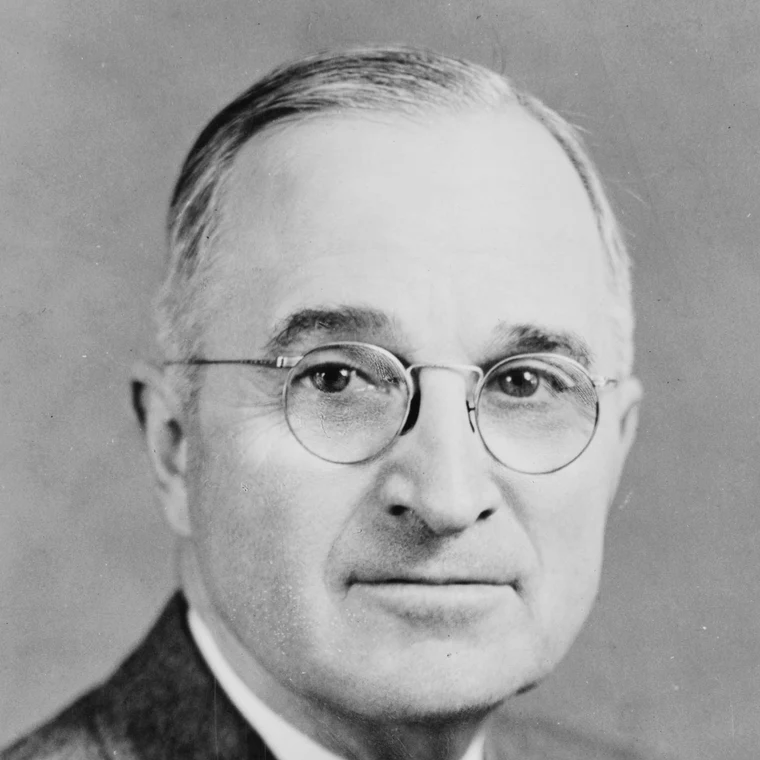
President Harry Truman made the decision to use the atomic bomb. He later said the choice was made to save lives by avoiding an invasion of Japan.. Image: Abbie Rowe, via Wikimedia Commons (Public domain)
Hiroshima and Nagasaki: where the atomic bomb was dropped
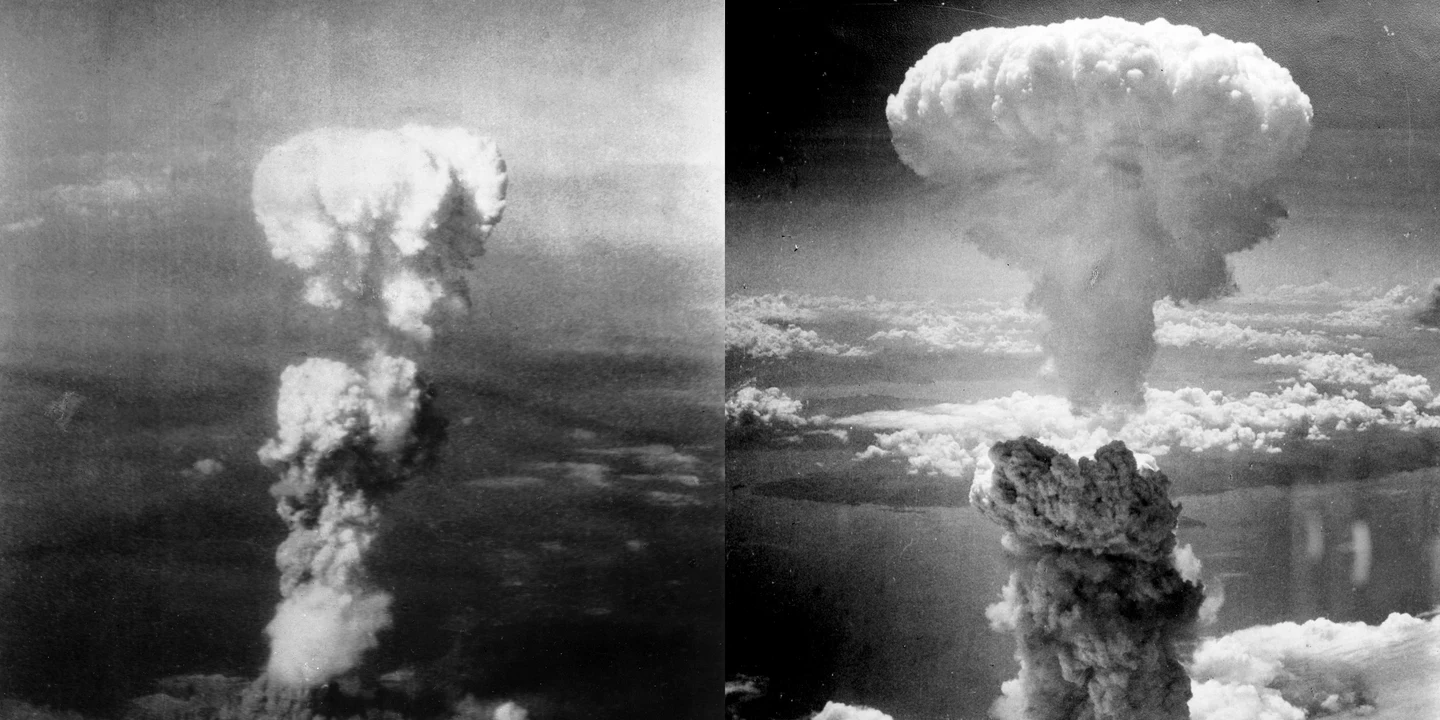
On 6 August 1945, a B-29 bomber named Enola Gay dropped an atomic bomb called "Little Boy" on the city of Hiroshima. The explosion destroyed approximately 70% of the city's buildings and killed an estimated 80,000 people instantly. Tens of thousands more died in the following weeks from burns, radiation sickness, and injuries.
Three days later, on 9 August, a second bomb — "Fat Man" — was dropped on Nagasaki. This blast killed approximately 40,000 people immediately. By the end of 1945, the combined death toll from both bombings had risen to an estimated 200,000. Many of these victims were civilians who succumbed to radiation exposure.
On 15 August 1945, Emperor Hirohito announced Japan's surrender in a radio broadcast. It was the first time most Japanese citizens had heard their emperor's voice. The formal surrender ceremony took place on 2 September aboard the USS Missouri in Tokyo Bay. World War 2 was officially over. The Allied victory on D-Day had already secured Europe, and now the Pacific war had reached its devastating conclusion.
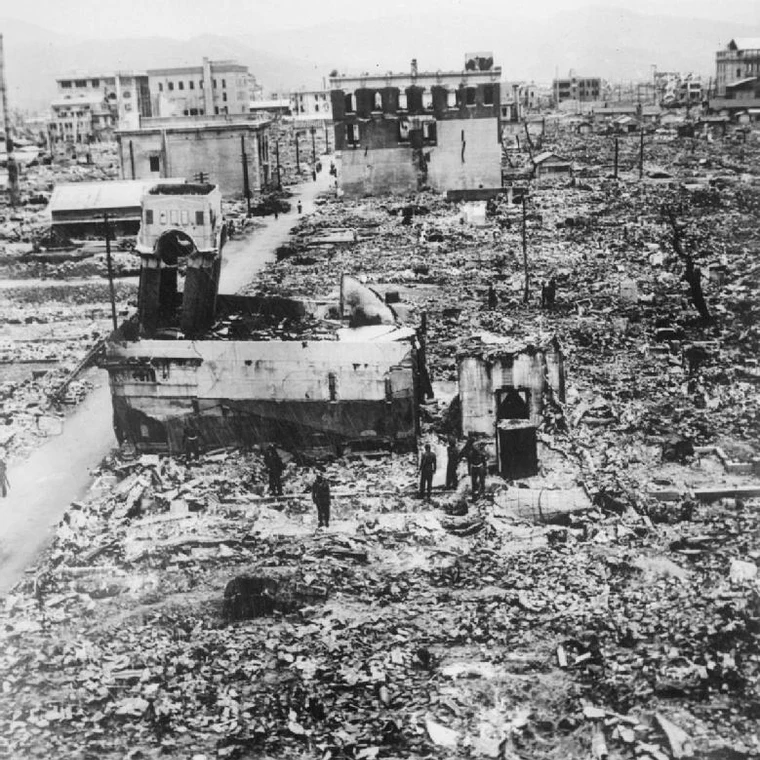
The ruins of Hiroshima after the atomic bomb. The blast flattened nearly everything within a 1.6-kilometre radius of the detonation point.. Image: US Army Signal Corps, via Wikimedia Commons (Public domain)
Did you know?
-
The Manhattan Project employed over 125,000 people across more than 30 sites and cost nearly $2 billion (about $28 billion today), making it one of the largest secret programmes in history.
Atomic Heritage Foundation — Manhattan Project -
The Hiroshima bomb, Little Boy, released energy equivalent to 15,000 tons of TNT. The blast destroyed 70% of the city's buildings and killed an estimated 80,000 people instantly.
Encyclopaedia Britannica — Atomic bombings of Hiroshima and Nagasaki -
By the end of 1945, the combined death toll from both bombings had reached approximately 200,000 — more than half of whom were civilians who died from radiation exposure in the weeks and months after the blasts.
National WWII Museum — The Decision to Drop the Bomb
The moral debate and the road to the Cold War
The decision to drop the atomic bomb remains one of the most debated events in modern history. Supporters argue that the bombings shortened the war and saved more lives than they took by preventing a prolonged invasion. Critics respond that Japan was already close to surrender. They argue that the bombings killed hundreds of thousands of civilians who had no role in the fighting.
Some senior American military leaders questioned the decision at the time. General Dwight D. Eisenhower later wrote that he had expressed "grave misgivings" about using the weapon. Admiral William Leahy, Truman's chief military advisor, called the bomb "barbarous" and argued that its use violated ethical standards of warfare.
Beyond the immediate moral questions, the bombings reshaped global politics. The Soviet Union tested its own atomic bomb in 1949, and the two superpowers entered a nuclear arms race that defined the Cold War. By the 1960s, both nations had stockpiled enough weapons to destroy civilisation many times over. The fear of nuclear war influenced international relations for decades. It also led to arms control agreements such as the Nuclear Non-Proliferation Treaty of 1968.
The atomic bombings of 1945 therefore did not just end one war. They also set the stage for a new kind of conflict — one defined by the threat of total annihilation.
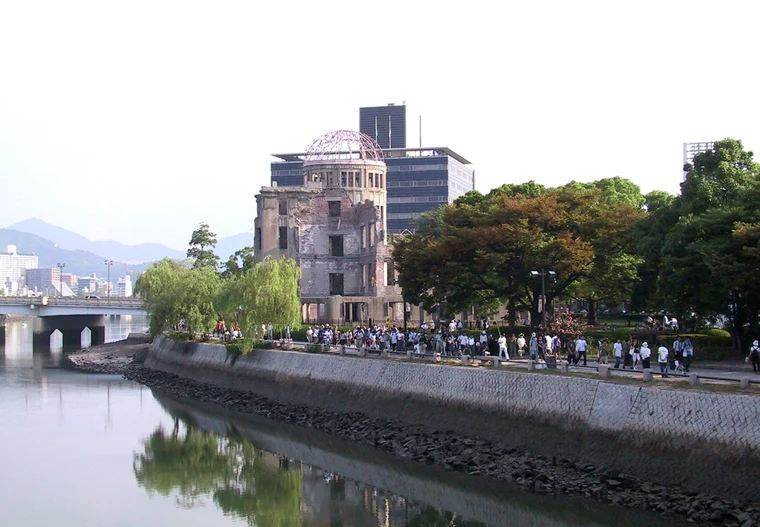
The Hiroshima Peace Memorial (Genbaku Dome) stands as a reminder of the destruction caused by the atomic bomb. It was designated a UNESCO World Heritage Site in 1996.. Image: Oilstreet, via Wikimedia Commons (CC BY 2.5)
Frequently asked questions
- How many people died from the atomic bombs?
- The bombings of Hiroshima and Nagasaki killed an estimated 200,000 people by the end of 1945. About 80,000 died instantly at Hiroshima and 40,000 at Nagasaki. Tens of thousands more died in the following months from radiation sickness, burns, and injuries.
- Why was Hiroshima chosen as the target?
- Hiroshima was selected because it was a major military headquarters that had not been heavily bombed, so the weapon's effects could be clearly assessed. The city also had a large enough flat area for the blast to cause maximum damage.
- Did Japan try to surrender before the bombs were dropped?
- Japan had sent diplomatic signals through the Soviet Union exploring peace terms, but its military leadership refused unconditional surrender. After the first bomb hit Hiroshima, hardliners in the government still resisted. Japan formally surrendered on 15 August 1945, after both bombings.
- Who decided to drop the atomic bomb?
- President Harry Truman made the final decision. He consulted military advisors, scientists, and cabinet members. Truman later said he ordered the bombings to end the war quickly and avoid the massive casualties expected from invading Japan's home islands.
- What was the Manhattan Project?
- The Manhattan Project was a secret US-led research programme from 1942 to 1945 that developed the first nuclear weapons. Led by physicist J. Robert Oppenheimer, it employed over 125,000 people and produced the bombs dropped on Hiroshima and Nagasaki.