Do animals have feelings? Where the question started
Do animals have feelings, and can science tell? The question began with Charles Darwin. In 1872 he published The Expression of the Emotions in Man and Animals. It was the only one of his books illustrated with photographs. He argued that emotional life runs on a continuum across species. The differences, he said, are of degree rather than kind. For the bigger picture behind continuity, read about what evolution is.
However, many later scientists rejected Darwin's view. Behaviourists held that mental events in animals could not be studied scientifically. B. F. Skinner called emotions fictional causes that we blame for behaviour. In 1951 Niko Tinbergen called it idle to claim or deny animal feelings, since they cannot be observed. As a result, for most of the twentieth century scientists wrote of anxiety-like behaviour in animals rather than fear.
The neuroscientist Jaak Panksepp pushed back. He argued that animals find certain brain states rewarding or punishing, which he took as strong evidence of feeling. So do animals have feelings? The modern answer depends on which feeling you mean, and on how you try to measure it.

A dog looks up closely at the photographer.. Image: Pittigrilli, via Wikimedia Commons (CC BY-SA 4.0)
Play, laughing rats and optimistic animals
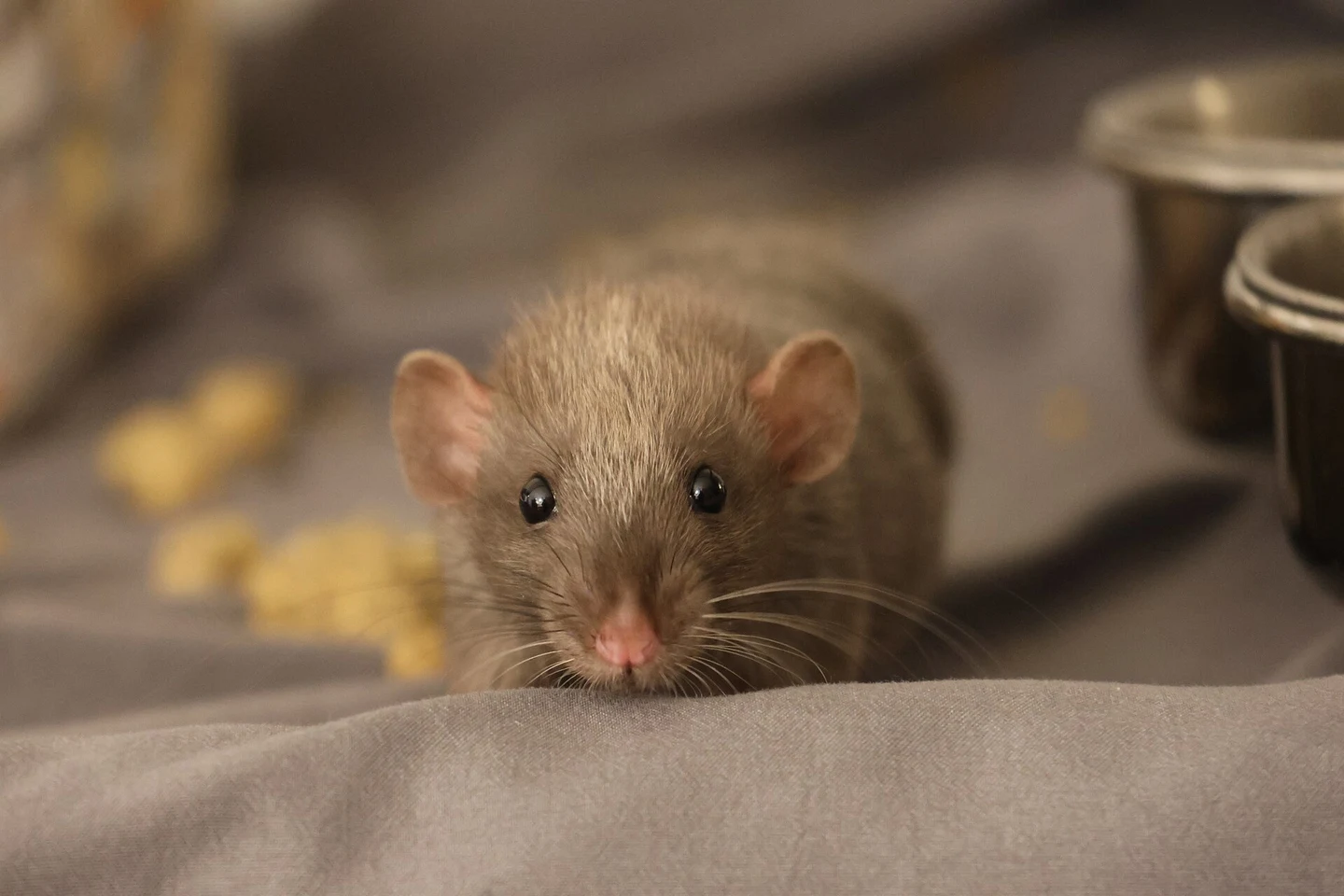
Do animals have feelings of joy? The best clues come from play and from mood tests. In 2000 Jaak Panksepp and Jeffrey Burgdorf tickled rats in a way that copied rough-and-tumble play. The rats gave ultrasonic calls at around 50 kilohertz, too high for human ears. Rats make these calls in play, in mating and while expecting food. In contrast, calls nearer 22 kilohertz come in bad moments, such as near predators.
Play itself is a clue. The biologist Patrick Bateson argued that truly playful play comes with a positive mood. In one study, bumblebees even rolled small wooden balls with no food reward. Whether that is play remains open.
Measuring a mood with a judgement-bias test
How do you ask a rat about its mood? In 2004 Harding and colleagues trained rats that one tone meant food and another meant a burst of noise. Then the rats heard in-between tones. Rats kept in unpredictable housing responded more slowly and pressed the lever less often, as if expecting less good news. In a 2012 study, Laughing Rats Are Optimistic, rats that called a lot while tickled judged an ambiguous tone more optimistically. Rats that hardly called did not. Similar biases have been reported in dogs, sheep and even honeybees.
These tests have a weakness, however. In 2017 Bonnie Perdue saw monkeys drift towards one answer with nothing done to change their mood. She suggested a simpler contrast effect and urged careful checks. A bias is a clue to mood, not proof of it.
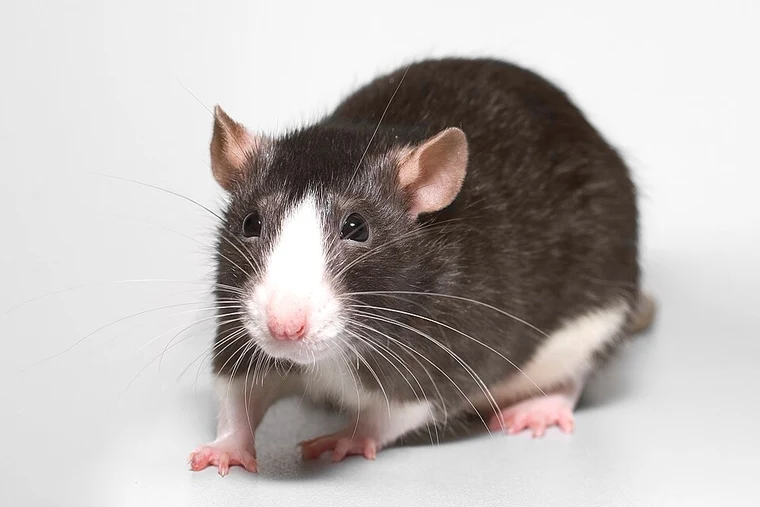
A pet fancy rat with a white blaze marking.. Image: AlexK100, via Wikimedia Commons (CC BY-SA 2.0)
Do animals have feelings like grief?
Do animals have feelings of grief? It remains an open question, because simpler explanations often fit the same behaviour. In 2018 an endangered orca known as J35, or Tahlequah, carried her dead newborn calf for 17 days. On the last day of 2024, researchers saw her carrying another lost calf. NOAA Fisheries writes that killer whales form strong, lifelong bonds, and describes her behaviour as reflecting grief.
Elephants also guard their dead and inspect the bones of their own kind. Some researchers read this as possible grief. Others read it as an animal coming to understand death.
Primates show why caution matters. Elisa Fernández-Fueyo and colleagues gathered 409 published cases of mothers carrying a dead infant, across 50 primate species. Carrying was more likely in younger mothers and when the infant died of illness. That fits two simpler ideas: a slower recognition of death, or a by-product of strong mothering. The authors called any role for emotion speculative.

A killer whale pod in Prince William Sound, Alaska.. Image: U.S. Fish and Wildlife Service, via Wikimedia Commons (Public domain)
Pain versus nociception: which animals feel pain?
Do animals have feelings of pain? To answer, scientists first separate pain from nociception. Nociception is the unconscious process of detecting and avoiding harm. Pain is an unpleasant feeling. The two can come apart: a withdrawal from harm might happen with no feeling at all. Animals cannot describe what they feel, so researchers look for clues.
One framework for judging pain lists eight such clues. For example, does the animal weigh harm against a reward? Does it learn to prefer a place where relief can be found? The more clues an animal meets, the higher the likelihood of pain.
Mammals and fish
For mammals, scientists judge pain highly likely. Yet even an injured dog that winces and limps gives no formal proof. Fish are more contested. In 2003 Sneddon and colleagues found harm-detecting nerve endings in rainbow trout. Trout given a mild irritant on the lips breathed faster and took longer to feed again. Critics such as James Rose argued that fish lack the brain capacity to experience pain. Even so, in 2023 a UK advisory committee wrote that it is widely accepted that finfish are sentient.
Crabs and octopuses
Hermit crabs appear to weigh their choices. In a 2009 study, crabs in high-quality shells needed a stronger unpleasant stimulus before they left. In 2021 a UK government review found strong evidence that crabs, lobsters and other decapods are sentient. In the same year, octopuses in a place-memory test avoided places where they had felt discomfort. They preferred a place where relief came. Its author, Crook, concluded only that octopuses are likely to feel the unpleasant side of pain.
Insects
Insects remain an open question. Bumblebees put up with a heated feeder when the unheated ones held weaker sugar. That flexibility suggests avoiding heat is not simply a reflex. In 2021, however, one team argued that fruit fly brains lack the wiring to feel pain at all. Another team had argued in 2016 that insect brains may support the most basic kind of experience.
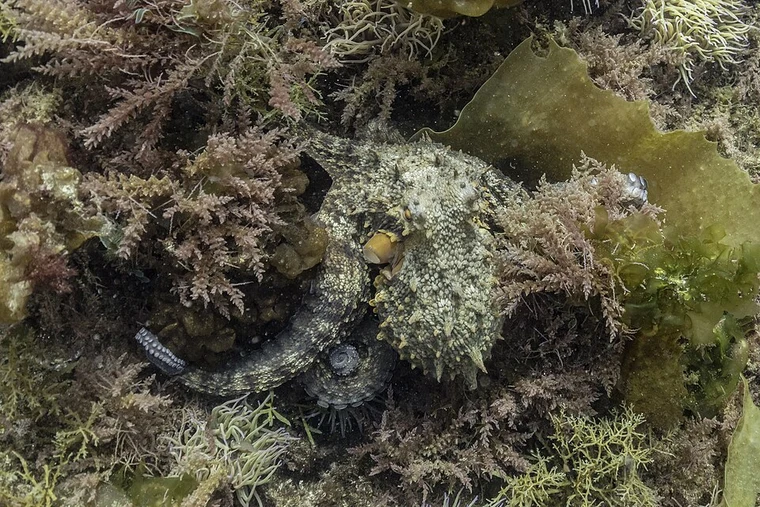
A common octopus in Arrábida Natural Park, Portugal.. Image: Diego Delso, via Wikimedia Commons (CC BY-SA 4.0)
Did you know?
-
In a 2012 study, rats that gave many high-pitched calls while being tickled then judged an ambiguous tone more optimistically. Rats that hardly called did not.
Laughing Rats Are Optimistic (Rygula, Pluta and Popik, PLOS ONE 2012) -
In November 2021 the UK government extended its Animal Welfare (Sentience) Bill to decapod crustaceans and cephalopod molluscs, after a review found strong scientific evidence that they are sentient.
Lobsters, octopus and crabs recognised as sentient beings (GOV.UK, 2021) -
In a 2021 octopus study, every animal given a mild irritant tended the affected spot. A local anaesthetic abolished this tending.
Behavioral and neurophysiological evidence suggests affective pain experience in octopus (Crook 2021)
Do animals have feelings we can prove? What the declarations say
No outside test can prove that an animal is conscious, and the famous declarations do not claim otherwise. The researcher Bradley Love argues that consciousness is felt from the inside, while science measures from the outside. With other animals, the analogy with ourselves weakens. So researchers rely on proxies such as flexible behaviour. Love calls such frameworks valuable, but not answers.
On 7 July 2012 scientists issued the Cambridge Declaration on Consciousness. It stated that non-human animals have the brain machinery linked with conscious states. It named all mammals and birds, and octopuses too. Notice exactly what it claimed: machinery, not feelings directly observed.
In April 2024 the New York Declaration on Animal Consciousness was launched at New York University. It states that there is at least a realistic possibility that insects are conscious. It is a signed declaration, not an experiment with new data. Both record expert opinion. One research team cited the New York Declaration for mammals and birds, whose sentience is widely recognised, and left fish, octopuses and insects aside as contested cases. So do animals have feelings? For some animals the case is strong, and for others it is still being argued.
To explore whether animals have feelings in a real dialogue, see the Animal Minds course. Parents can also visit the page for parents.
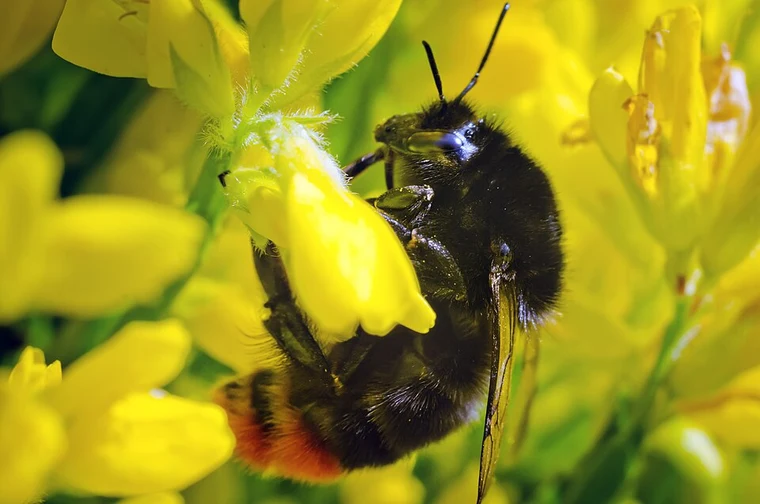
A bumblebee feeding on a yellow flower.. Image: Jakub Fryš, via Wikimedia Commons (CC BY-SA 4.0)
Frequently asked questions
- Do animals have feelings according to science?
- For mammals, scientists judge pain highly likely, and mood tests in rats suggest good and bad moods. For fish, crabs, octopuses and insects the evidence varies, and some questions stay open. No outside test proves feelings directly, so conclusions rest on how strongly the clues add up.
- What is the difference between pain and nociception?
- Nociception is the unconscious process of detecting and avoiding harmful stimuli. Pain is an unpleasant feeling that often comes with injury. The two can come apart: an animal might pull away from harm with no feeling at all. That is why pain is hard to identify in other animals.
- Do rats really laugh when tickled?
- Tickled rats give ultrasonic calls at around 50 kilohertz, the same calls they make in play and while expecting food. Scientists use these calls as a measure of positive feeling in rats. A 2012 study on tickling and mood was titled Laughing Rats Are Optimistic.
- Do fish feel pain?
- This is contested. Trout have harm-detecting nerve endings and change their behaviour after a mild irritant. Critics argue that fish lack the brain capacity to experience pain. In 2023 a UK advisory committee wrote that it is widely accepted that finfish are sentient, with some perceptual experience of pain.
- What did the Cambridge Declaration on Consciousness say?
- Issued in 2012, it stated that non-human animals have the brain machinery linked with conscious states. It named all mammals and birds, and octopuses. It is a statement of expert opinion about brain machinery, not a finding that any animal's feelings were directly observed.
- Do animals grieve?
- It is an open question. An orca carried her dead calf for 17 days, and elephants guard their dead. Yet simpler explanations can fit such behaviour. A study of 409 primate cases found patterns that fit slow recognition of death, and its authors called any role for emotion speculative.