
Do animals understand humans from their faces?
Some animals clearly tell human faces apart, and some react to the emotion a face shows. Horses and sheep give the clearest examples.
In a 2016 study, horses' heart rates rose faster at photographs of angry human faces than at happy ones. A 2018 experiment went further. Horses saw a photograph of a person looking angry or happy. Several hours later, that same person came by with a neutral face. The horses responded differently, depending on the photograph they had seen.
A 2026 study of horses and human emotions sums up a series of such experiments. Horses can recognise individual human faces in photographs and remember them for at least six months. They also react more negatively to angry human faces and voices than to joyful ones. In addition, when they face something new, they use a person's emotional cues to guide their reaction.
Horses seem to watch negative human faces mainly with the left eye. However, several horse studies have found contradictory results, so this detail is still open.
Sheep have a strong memory for faces too. A 2001 study found that sheep can remember the faces of 50 other sheep for more than two years. Then, in 2017, eight sheep in Cambridge learned the faces of four celebrities from photographs, among them Barack Obama and Emma Watson. Afterwards, they picked those faces over strangers' faces.
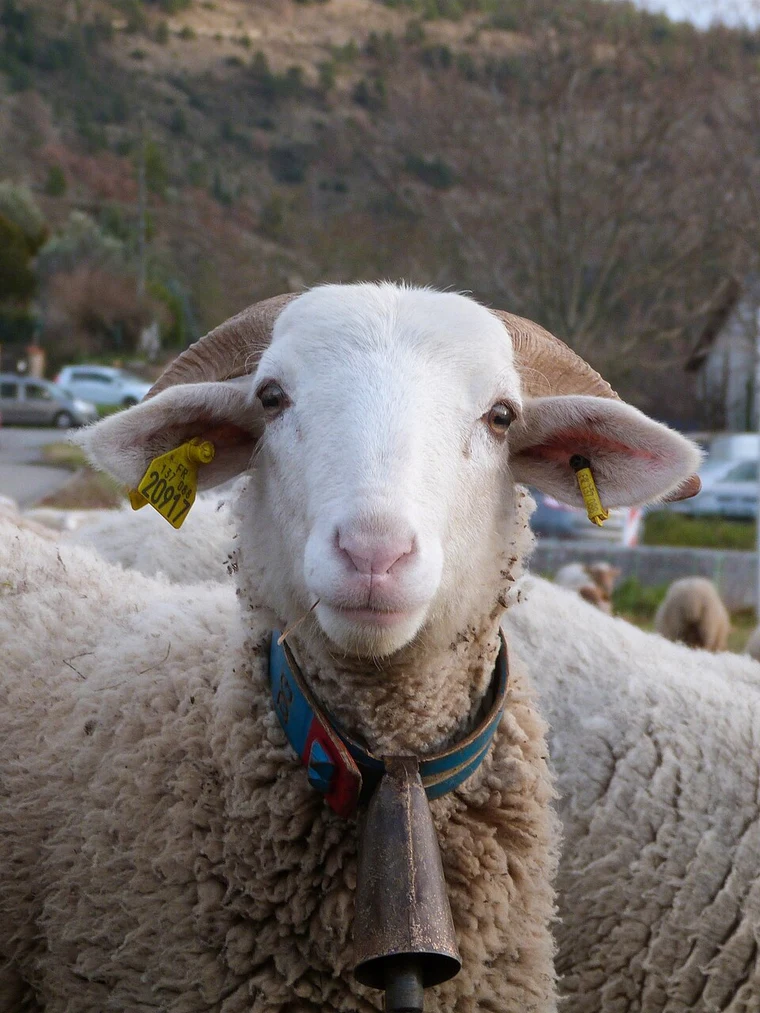
A ewe looks straight at the camera at the 2024 transhumance festival in Vesseaux, France.. Image: Kakoula10, via Wikimedia Commons (CC BY-SA 4.0)
Do animals understand humans by matching face and voice?
Several species seem to link a human voice to the right face. Scientists call this cross-modal recognition, and they test it by watching where an animal looks.
In a 2016 study, dogs heard a voice while two faces were shown side by side, one happy and one angry. They looked longer at the face whose emotion fitted the voice. Horses, in contrast, have often looked longer at a face that clashed with the voice they heard. Yet horses recognising familiar handlers looked longer at the match.
The direction of the stare is therefore not the point. Researchers suggest it may vary with the species, or with the emotion and stress the test causes. What matters is a reliable difference, because it shows that the animal connects face and voice.
Cows have joined the list. In a 2026 study, cows watched two silent videos side by side, one of a familiar person and one of a stranger. They looked longer at the stranger's face, a sign they could tell the two apart. Researchers also suggest that horses, dogs and cats may form mental representations of human emotions. That remains a suggestion, not a settled finding.
So, on this evidence, do animals understand humans? For several species, looking tests suggest they at least link a voice to a face.
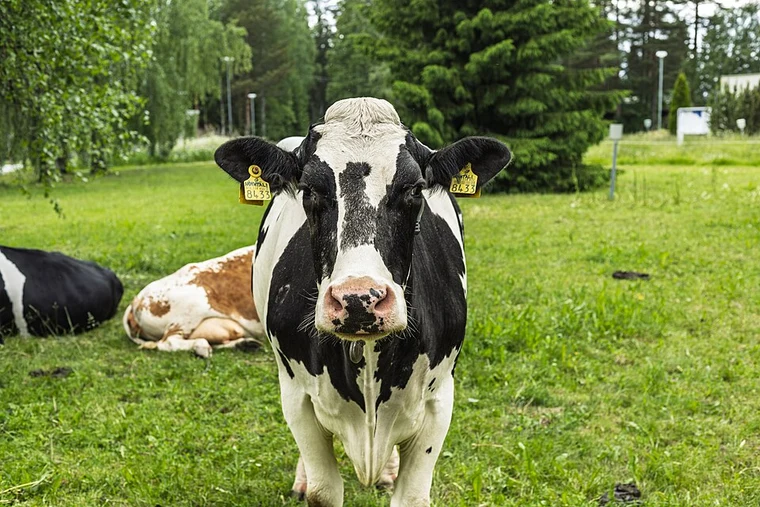
A dairy cow looks straight at the camera in a field.. Image: Osmo Lundell, via Wikimedia Commons (CC BY-SA 4.0)
Do cats understand humans? Names, voices and slow blinks
Cats are harder to test than dogs, but the results so far suggest they pay close attention to people.
Take names. In a 2019 study, cats heard four ordinary words, matched to their name in length and accent. Once the words bored them, their own name made them react again. Most cats showed this with an ear or head movement, not by walking over. So a cat may know its name and still not come.
Do animals understand humans who are out of sight? Cats seem to keep track of an unseen owner. In a 2021 study of 50 cats, the owner's voice called the cat's name from a speaker outside the door. Then a call came from a speaker inside the room, at least four metres away. Cats looked most surprised when the owner's voice seemed to jump to the new place. That reaction disappeared with cat calls or non-voice sounds. The researchers suggest cats hold a mental picture of where their unseen owner is.
Finally, there is the slow blink. In a 2020 study, owners sat about a metre from their cats and slow-blinked whenever the cat looked at them. The cats slow-blinked back more often than with no human interaction. In a second experiment, cats were more likely to approach a researcher after a slow blink than after a neutral face. In cats, this half-blink seems to communicate positive emotion toward people.
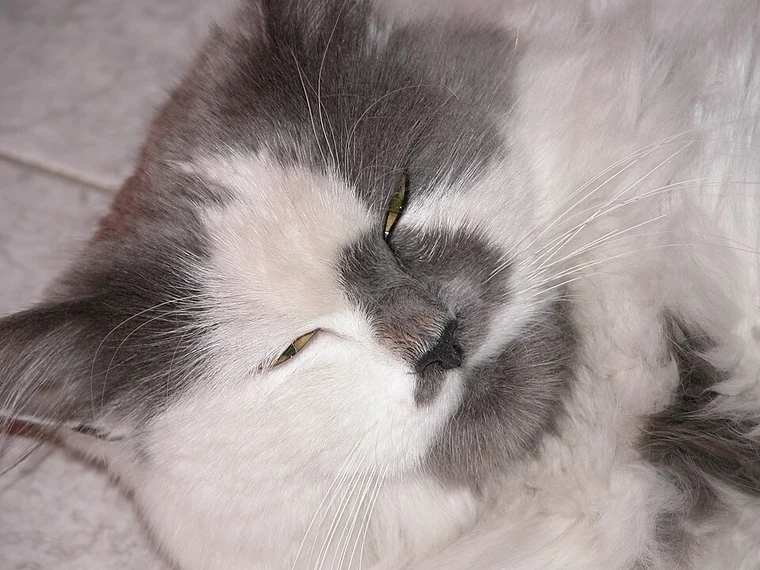
A grey and white cat rests with its eyes half-closed.. Image: Antonino Taverna, via Wikimedia Commons (CC BY-SA 3.0)
Checking a person's reaction
Do animals understand humans when something new appears? Some animals glance at a person before deciding how to react to something strange. Psychologists call this social referencing, and human infants do it with their carers.
In a 2012 study of pet dogs, each dog met an electric fan with green plastic ribbons attached. A person then gave a positive or negative message about the fan, using only voice and face. Of the dogs tested with their owner, 76 percent looked back at that person. With a stranger, 60 percent did. That difference was too small to be statistically significant.
However, a glance alone does not prove social referencing, because an animal might simply be seeking comfort. The second half is a change in behaviour. With the owner informing, a positive message brought dogs closer to the fan, while a negative one slowed them.
Cats met a similar fan in a 2015 study. Of 24 cats, 79 percent looked back and forth between their owner and the fan. Some also shifted their behaviour to fit the owner's message.
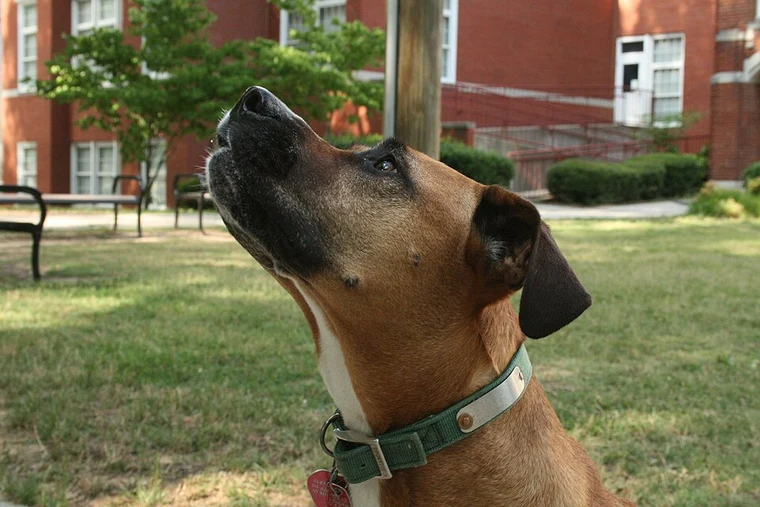
A dog named Ruby looks up while begging for a treat.. Image: Ildar Sagdejev, via Wikimedia Commons (CC BY-SA 3.0)
Did you know?
-
In a 2012 pointing test, 24 of 32 family dogs chose the object a person pointed at on the very first trial. Only 9 of 20 chimpanzees did.
Dogs (Canis familiaris), but Not Chimpanzees (Pan troglodytes), Understand Imperative Pointing — PLOS ONE -
In a 2021 cat study, the two speakers stood at least four metres apart. That is too far for anyone to move between them in two and a half seconds.
Socio-spatial cognition in cats: Mentally mapping owner's location from voice — PLOS ONE -
A Yorkshire terrier named Bailey fetched named toys from a set of 117. When two strangers with different accents asked, she was right on 13 of 16 trials. Yet she learned new toy names only slowly: asked to choose between two new toys, she at first did no better than chance.
Vocabulary Learning in a Yorkshire Terrier: Slow Mapping of Spoken Words — PLOS ONE
Dogs, pointing, words and the guilty look
Do animals understand humans who point at something? Dogs stand out at following a pointing finger, although even dogs show clear limits with words and feelings.
In a 2012 pointing test, 24 of 32 family dogs chose the object a person pointed at on the very first trial. Only 9 of 20 chimpanzees did.
Part of this skill seems to be inherited. In 2021, researchers tested 375 service-dog puppies just eight weeks old. Genes explained more than 40 percent of the differences in how well they followed a pointing finger. Wolves raised by hand tell a similar story. At four months, pet dogs followed a pointing finger, while wolves of the same age did no better than chance. As adults, the socialised wolves caught up.
Words are a harder case. Researchers searched the world for two years and found six dogs that already knew many toy names. All six learned two new toy names within three months. Of 34 ordinary family dogs, only one did. Chaser, a border collie, learned the names of more than a thousand objects over three years of training. She was one dog, so she shows what is possible rather than what is typical.
Then there is the guilty look. In a 2009 experiment, owners were sometimes told wrongly that their dog had taken a forbidden treat. The guilty look matched whether the owner scolded, not whether the dog had actually taken the treat. Whether dogs feel guilt at all is still an open question.
So do animals understand humans? The studies show that many animals read our faces, voices, gestures and reactions. What they grasp about our thoughts and feelings remains open. You can work through these experiments yourself in the Animal Minds course, in a dialogue with a personal AI tutor. The course is also in the Epivo app.
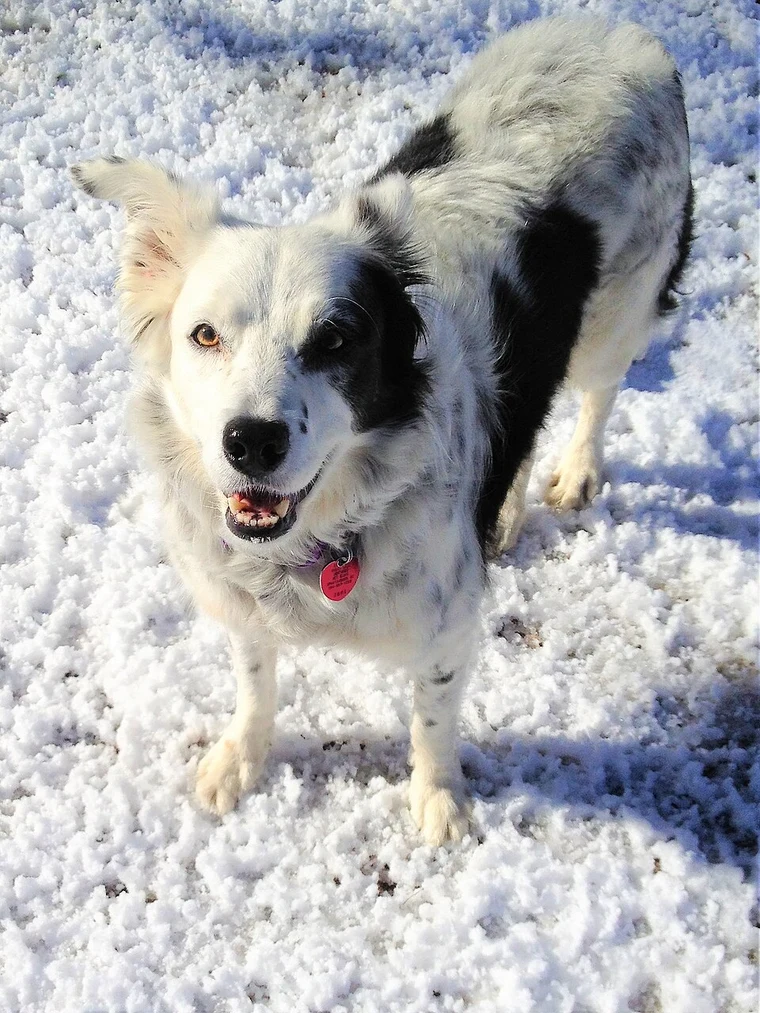
Chaser, the border collie studied by John Pilley, in the snow in 2013.. Image: Pilleybianchi, via Wikimedia Commons (CC BY-SA 4.0)
Frequently asked questions
- Do animals understand human emotions?
- Some animals react to them. Horses' heart rates rose faster at angry human faces than at happy ones, and they react more negatively to angry faces and voices. Dogs looked longer at the face whose emotion fitted a voice. Whether animals understand emotions as we do is still open.
- Do cats know their names?
- A 2019 study suggests they can tell their name from other words. After cats grew bored of four ordinary words matched to their name in length and accent, their own name made them react again. Most showed it with an ear or head movement rather than by walking over.
- Can animals recognise human faces?
- Several can. Horses recognise individual human faces in photographs and remember them for at least six months. In 2017, eight sheep learned four celebrity faces from photographs and later picked them over strangers. Cows in a 2026 study looked longer at a stranger's face than at a familiar one.
- Why do dogs follow a pointing finger?
- Part of the skill seems inherited. In a 2021 study of 375 puppies just eight weeks old, genes explained more than 40 percent of the differences in pointing-following. Hand-raised wolves did no better than chance at four months, while pet dogs of the same age succeeded.
- Does a dog's guilty look mean it feels guilty?
- Not necessarily. In a 2009 experiment, the guilty look matched whether the owner scolded, not whether the dog had taken a forbidden treat. Whether dogs feel guilt is still an open question.